
The Dangers of AI Mediocrity and How Businesses Can Break Free

Artificial intelligence is supposed to usher in a golden age of productivity, innovation, and growth. But with few success stories and minimal ROI, businesses need to think twice before going all-in.
This article was first published on LinkedIn.
“I think there’s a lot of mediocrity in today’s NFL. I don’t see the excellence that I saw in the past. I think the coaching isn’t as good as it was. I don’t think the development of young players is as good as it was. I don’t think the schemes are as good as they were. The rules have allowed a lot of bad habits to get into the actual performance of the game. So I just think the product in my opinion is less than what it’s been.”
Legendary quarterback Tom Brady’s assessment of the NFL mirrors the frustration many feel about the current state of tech.
Maybe it’s hype, maybe it’s a bubble, or maybe it’s simply a case of being too early, where the technology needs to catch up to its lofty promises.
Or maybe it’s just plain mid.
Across workflows, strategy, planning, oversight, and more, mediocre AI is being rolled out everywhere you look.
You see it in marketing. In a race to the bottom, teams are churning out reams of “AI slop” and polluting the internet with troves of low-value media.
There’s also “workslop” that masquerades as good work but kills productivity. When a worker uses AI to produce something subpar, it forces colleagues to spend more time interpreting, correcting, or redoing the work than if they had done it themselves.
You see it in failed rollouts and initiatives. Replit wiped out a customer’s production database. Grok spewed racist rants, fake books and authors flooded marketplaces, and hallucinating chatbots went haywire in drive-thrus, court cases, and airlines. Deloitte just refunded part of a $290k payment because a report they produced was full of AI-generated errors.
You also see it in IT. From infrastructure management and security to applications and device management, AI is supposed to transform how employees are supported and services are delivered. Yet employees are disengaged, have an unhealthy relationship with work, and aren’t getting more productive.
Indeed, people are rightly questioning whether AI delivers any value at all. Whatever the case, organizations adopting AI find it challenging to generate tangible returns from their investments.
Where’s the ROI?
The central themes running through today’s tech industry are unfettered disruption, seismic transformation, giant leaps in workforce productivity, and the potential of infinite markets, all powered by AI.
However, the results are lacking, especially considering the amount of capital invested. This year, America’s large tech firms will spend $400 billion on the infrastructure to run AI models. Between 2025 and 2028, spending could reach $2.9 trillion.
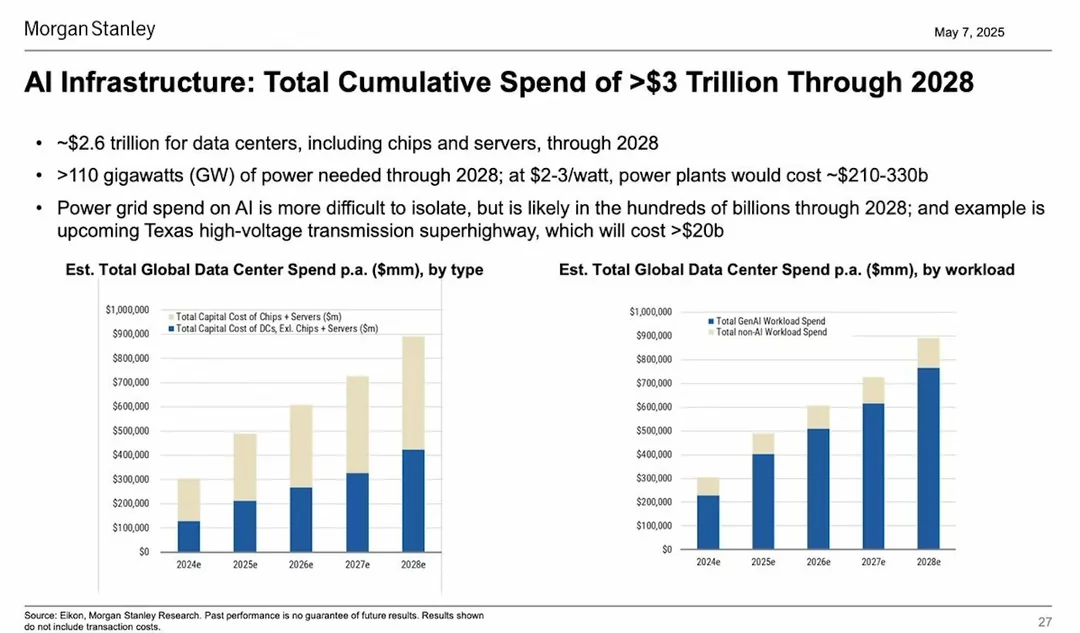
Yet when it comes to agentic AI, EY found that overall rates of ROI have “stagnated or directionally declined” in areas such as operational efficiencies, competitive advantages, and product innovation.
Although they surveyed a small sample size, MIT researchers found that 95% of organizations are getting zero return on their GenAI investments. Similarly, McKinsey found that eight in ten companies report no material impact on earnings, a phenomenon they coined the “genAI paradox.”
Meanwhile, a study by the St. Louis Fed on workforce productivity found that self-reported time savings from generative AI translated to just a 1.1% increase in aggregate productivity.
Talk of an AI bubble is now everywhere, especially in private tech valuations. The Atlantic recently pointed to slowing productivity gains, shaky ROI, and the so-called “trough of disillusionment” as warning signs. There’s also the issue of models not being as good as they claim. Apple researchers recently found that large reasoning models don’t really “think”, stating:
“Through extensive experimentation across diverse puzzles, we show that frontier LRMs face a complete accuracy collapse beyond certain complexities.”
These results point to a problematic trend: AI adoption continues to be driven by FOMO rather than any coherent strategy. The pressure to deliver comes from boards, CEOs, and CIOs who demand quick results, often without identifying and targeting economically valuable use cases. Too many companies bolt “intelligence” onto everything—go-to-market, development, operations, you name it—without ensuring it solves real problems or creates value. The lack of ROI reflects leadership decisions more than issues with the technology itself.
AI Is a Horizontal Enabling Layer
AI doesn’t solve problems on its own. It’s a horizontal enabling layer that amplifies human capability. The real value doesn’t come from the technology itself, but from how it’s applied. The sky’s the limit for businesses that harness its capabilities to put customers and users first.
For example, Shopify’s blowout quarter highlights how its AI offerings are helping e-commerce businesses get more products to more customers faster. Meanwhile, ServiceNow’s agentic AI offerings continue to help businesses automate and manage digital workflows while its internal usage creates more efficiencies. Adobe’s AI features are a hit with creative professionals, indicating that its investments are starting to pay off.
AI in IT
In IT, the potential is enormous. AI is becoming instrumental in optimizing the digital employee experience (DEX) by reducing friction, improving visibility and control, and making technology nearly invisible. From automating manual workflows and handling routine “how-to” requests with chatbots, to event correlation and self-healing that can prevent disruptions before they happen, there are some incredibly promising opportunities to drive engagement and productivity.
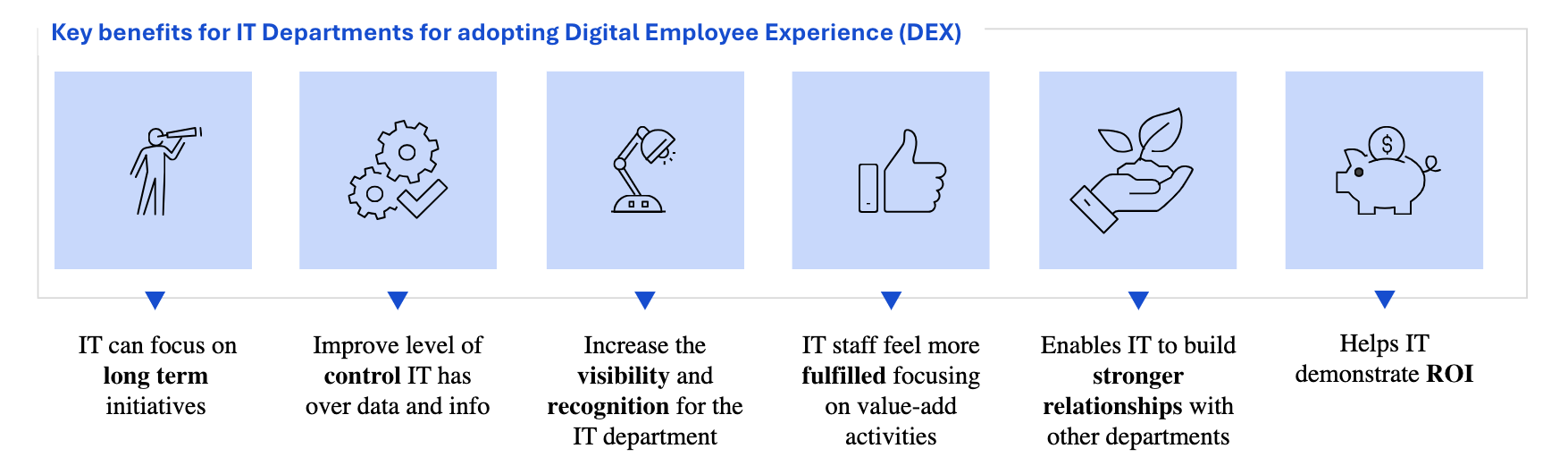
More importantly, DEX can transform IT from a cost center into a business accelerator. With fewer support tickets, faster resolutions, less downtime, optimized device lifecycles, and greater employee productivity, teams can demonstrate returns on technology investments.
Don’t Settle for Mediocre
The future looks promising, but only if businesses rethink how they deliver tangible value. Whether you’re using AI to create better products and services for customers or using it internally to lower costs and boost employee engagement and productivity, you need to start with great experiences and work backward to effect change.
Taking the sports analogy further, it’s like visualizing the win, then focusing on all the things it takes to get there. Everything else is just noise. It takes vision, discipline, work ethic, and maybe some luck, but that’s how champions are made.
I’m optimistic the pendulum will swing to leaders who focus on outcomes and put user experience first. If that happens, AI can move beyond its current mediocrity and deliver the kind of transformation every business wants.
HP Workforce Experience Platform is a comprehensive digital employee experience solution that enables organizations to optimize IT for every employee’s needs.
Discover how it can transform your IT operations from a cost center to a business accelerator. Simply fill out the form below, and our team will be in touch soon.
From the blog
The latest industry news, interviews, technologies, and resources.





Frequently asked questions
Here's everything you need to know about WXP.
- What is the HP Workforce Experience Platform (WXP)?
- How does WXP work?
- Can WXP be customized to fit specific business needs?
- How is WXP modular?
- Is WXP compatible with different vendors and operating systems?
- How does WXP integrate with other IT tools to provide a more comprehensive solution?
- What is a Workforce Experience score?
- How is AI used within WXP?
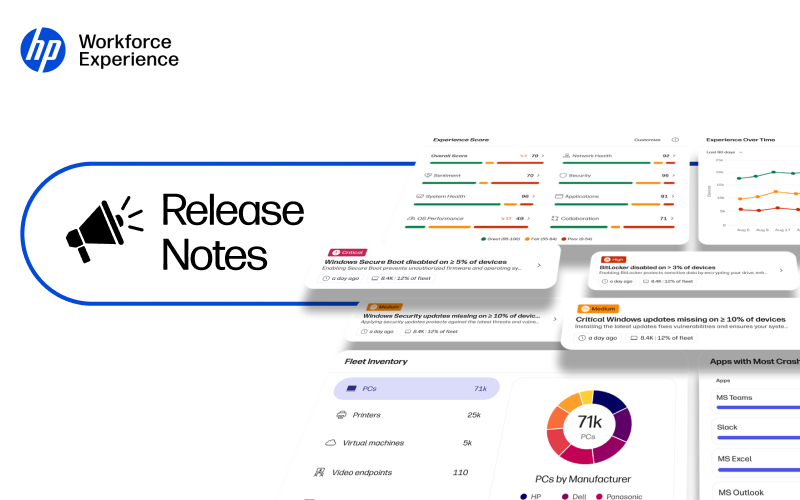
- How can I buy WXP and find out about new releases?