
Is DEX Worth the Investment? Uncovering the Trends Shaping Employee Experience

The digital employee experience (DEX) industry is undergoing rapid, landscape-altering changes. Here’s what they mean for the future of work.
This article was first published on LinkedIn.
It wasn’t long ago that surface-level perks like ping-pong tables and fancy cafeterias were thought to be the key to employee happiness. Executive leadership would throw money at superficial benefits to keep employees happy, all while overlooking the root causes of digital friction that would negatively impact sentiment.
But the world has changed. Only 28% of knowledge workers have a healthy relationship with work, and 68% want a more personalized work environment. Businesses that don’t offer frictionless and personalized digital experiences are finding it increasingly difficult to attract and retain top talent.
Today, a subpar digital employee experience (DEX) is a recipe for frustration and churn.
In a world where Gen Z now outnumbers baby boomers in the workforce, most employees care more about working efficiently and achieving a work-life balance than simply having access to a foosball table. They also demand consumer-grade digital experiences that are as good—if not better—than their personal iPhones, apps, and other devices.
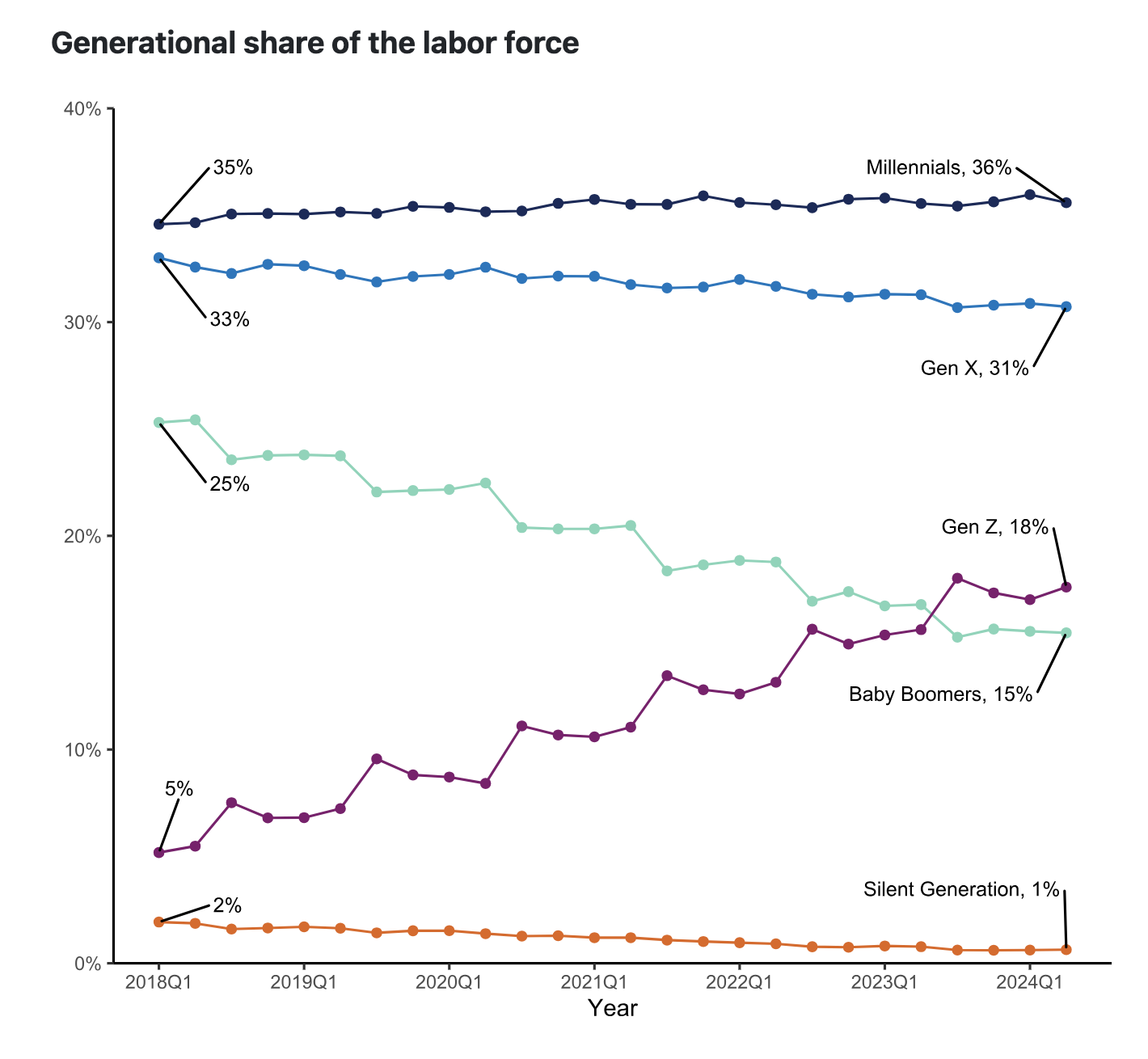
Source: U.S. Department of Labor, Analysis of CPS Basic Monthly Samples (2018–2024) accessed via IPUMS
Fortunately, a host of SaaS solutions now make work better for employees and dramatically easier for IT teams to manage. Modern DEX management software allows organizations to leverage device usage and performance data to optimize workflows and proactively address IT issues before they impact users. The potential benefits are wide-ranging, spanning from improved productivity to lower IT costs and enhanced employee satisfaction.
For CIOs and IT leaders, the real challenge is figuring out which investments will actually move the needle. With tighter budgets, growing talent gaps, and evolving employee needs, businesses can’t afford to invest in solutions that fall short. Success increasingly depends on understanding how the workplace is changing.
5 Disruptive Trends Reshaping the Employee Experience
Headwinds are putting immense pressure on technology budgets. Costs are rising, with worldwide IT spending expected to soar to $5.74 trillion in 2025.
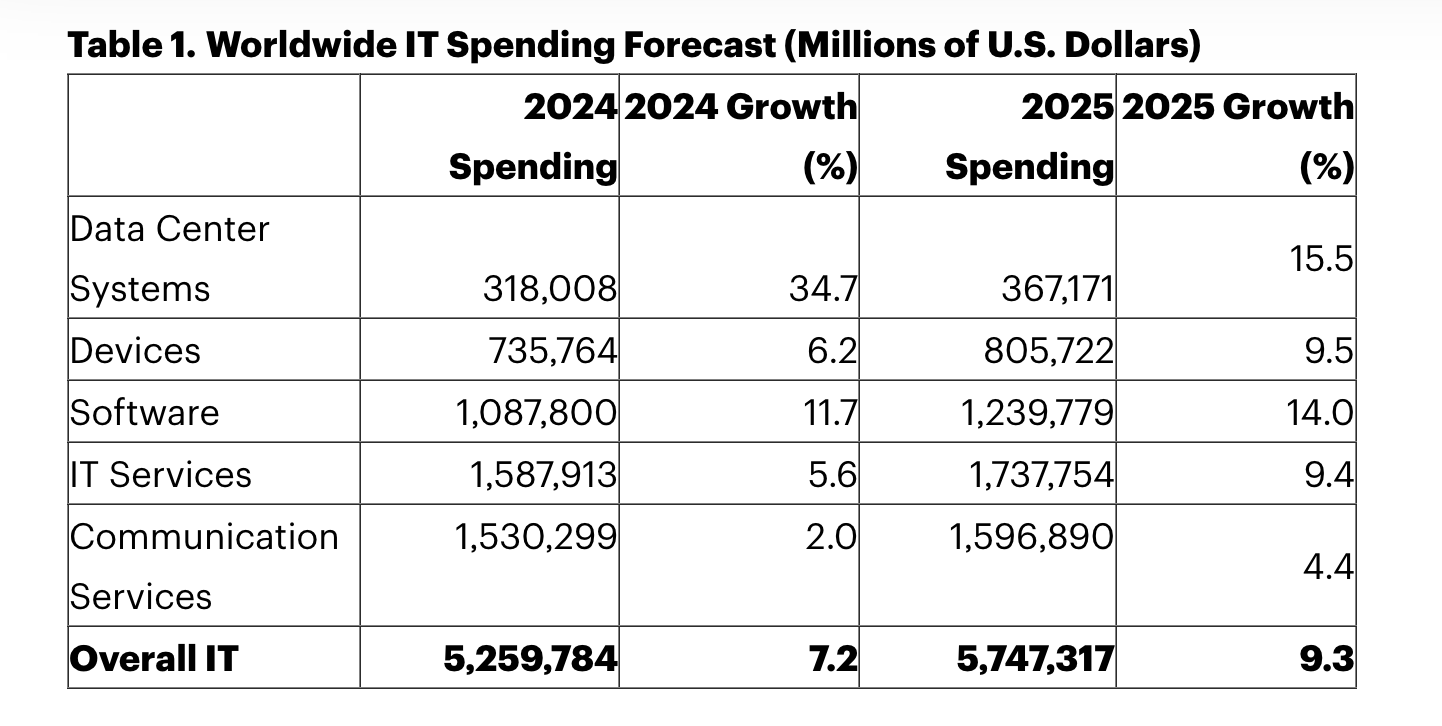
Source: Gartner (October 2024)
Further compounding the issue is the significant talent shortage seen across IT. IDC projects that over 90% of organizations worldwide will face challenges by 2026, potentially resulting in $5.5 trillion in losses.
Now more than ever, organizations must understand the trends shaping the employee experience and find the right solutions to overcome their specific challenges. Below are some critical trends enterprises should know and how modern DEX platforms can help them optimize their IT operations.
1. A more expansive, end-to-end approach to DEX
Most DEX platforms focus on IT issues on PCs, but this is only a small part of the overall employee experience. For example, research has shown that inefficient meetings are the number one blocker to productivity, and 68% of employees don’t have enough uninterrupted focus time during the workday. Poor collaboration costs U.S. companies hundreds of billions of dollars in lost productivity yearly.
DEX must evolve beyond PCs and take a full-stack approach to cover smartphones, printers, accessories, in-person meetings, unified communications (UC), and collaboration apps. Even for remote or hybrid employees, the experience across devices and applications must be seamless to ensure maximum effectiveness, both in and out of the office. Organizations should optimize the digital experience across endpoints and tools, ensuring employees can work and collaborate effortlessly anywhere, anytime.
The approach also includes the networks, conference rooms, virtual desktop infrastructure (VDI), and more. As employees rely on more tools to collaborate and work, the most advanced solutions will have a more holistic definition of DEX and offer robust solutions that monitor and manage all enterprise IT assets.
2. Faster, higher ROI from IT assets
CIOs are no longer just managing IT as a cost center. Today, they’re investment, infrastructure, and AI agent managers, responsible for all tech investments, delivering ROI, and driving key business outcomes.
This new mindset changes how CIOs approach technology investments. For example, time-based refresh cycles are dead. The best DEX platforms provide data-driven insights, allowing organizations to extend the life of perfectly good hardware instead of replacing entire fleets. They also avoid the risks of overusing outdated devices, lowering the risk of failure, downtime, or security vulnerabilities.
Looking ahead, CIOs will seek to maximize ROI and ensure efficient use of every technology dollar. At HP, we’ve seen a three-month payback period for our Workforce Experience Platform, and we believe the ROI could be even faster.
3. Office space reinvention
U.S. commercial real estate is heading toward a crisis, with rapidly plummeting values, empty office buildings, and loan losses on the horizon. Companies that invested heavily in office space before the pandemic are now pushing return-to-office mandates to avoid wasting their investments.
However, hybrid work has cut overall demand by 20% to 40%, making smaller footprints necessary. With DEX tools that provide real-time workspace insights, companies can identify underused spaces, eliminate “ghost” meetings, optimize room utilization, reduce costs, and improve efficiency. Additionally, CIOs will play a bigger role in reducing real estate costs and optimizing capital allocation.
4. SaaS sprawl consolidation
Analysts expect IT spending on software to soar 14% to $1.23 trillion in 2025. But many organizations struggle to extract real value from these massive investments. Application sprawl creates redundant tools and fragmented ecosystems. App “creep” overwhelms employees, resulting in unnecessary complexity and higher costs.
Meanwhile, productivity paranoia drives managers to rely on spying apps, creating a cycle of distrust and “productivity theater.”
DEX platforms can help break this cycle by giving IT teams deeper visibility into app performance, usage patterns, and employee feedback. Anonymous telemetry from millions of devices helps optimize SaaS investments, streamline workflows, and reduce costs.
5. Self-healing and event correlation
AI isn’t an outcome—it’s a tool, and its real value in DEX lies in how effectively it can automate detection and remediation at scale.
For example, when a major incident like the CrowdStrike outage hits, IT teams need to know if the problem is within their ecosystem or part of a broader, external event. AI-powered DEX platforms can identify the root cause, shifting the conversation from “Can we fix this with AI?” to “How can we do it faster and more efficiently?”
Whether it’s called AI-based scripting, autonomous anomaly detection, event correlation, or self-healing, the goal is the same: using AI to proactively detect, diagnose, and resolve IT issues without manual intervention. This approach reduces the cognitive load on IT managers by automating everything from root cause analysis to deploying fixes.
True self-healing AI goes beyond device-level issues, connecting the dots across entire ecosystems. It can identify whether a problem is due to a Zoom or Microsoft Teams outage, a regional network issue in Scottsdale, or a power outage on Mercer Island, correlate issues with internal signals, and surface the right insights to IT teams.
This broader context makes self-healing a critical trend for improving employee experience.
Settling the DEX Debate
For CIOs, DEX is no longer optional. It’s the only way to effectively manage the workforce and optimize productivity in the age of artificial intelligence. Rather than focusing solely on cutting headcount or reducing labor costs, the future will be about doing more with the resources you already have and maximizing the potential of every asset.
At HP, we believe DEX is the key to unlocking the full potential of the modern workforce. Embracing this new approach to workforce optimization will propel businesses forward while positioning them to lead and shape the future of work.
If you want to learn more about what we’re building, join me and our team at the Global CIO Community Executive Summit at the Four Seasons Hotel New Orleans from September 10-12, 2025. Sign up here.
HP Workforce Experience Platform is a comprehensive and modular digital employee experience solution that enables organizations to optimize IT for every employee’s needs.
If you want to learn more about the HP Workforce Experience Platform, we would love to speak to you! Simply fill out the form below, and a team member will be in touch.
From the blog
The latest industry news, interviews, technologies, and resources.





Frequently asked questions
Here's everything you need to know about WXP.
- What is the HP Workforce Experience Platform (WXP)?
- How does WXP work?
- Can WXP be customized to fit specific business needs?
- How is WXP modular?
- Is WXP compatible with different vendors and operating systems?
- How does WXP integrate with other IT tools to provide a more comprehensive solution?
- What is a Workforce Experience score?
- How is AI used within WXP?
- How can I buy WXP and find out about new releases?