
Gartner IT Symposium/Xpo 2025 Session Recap
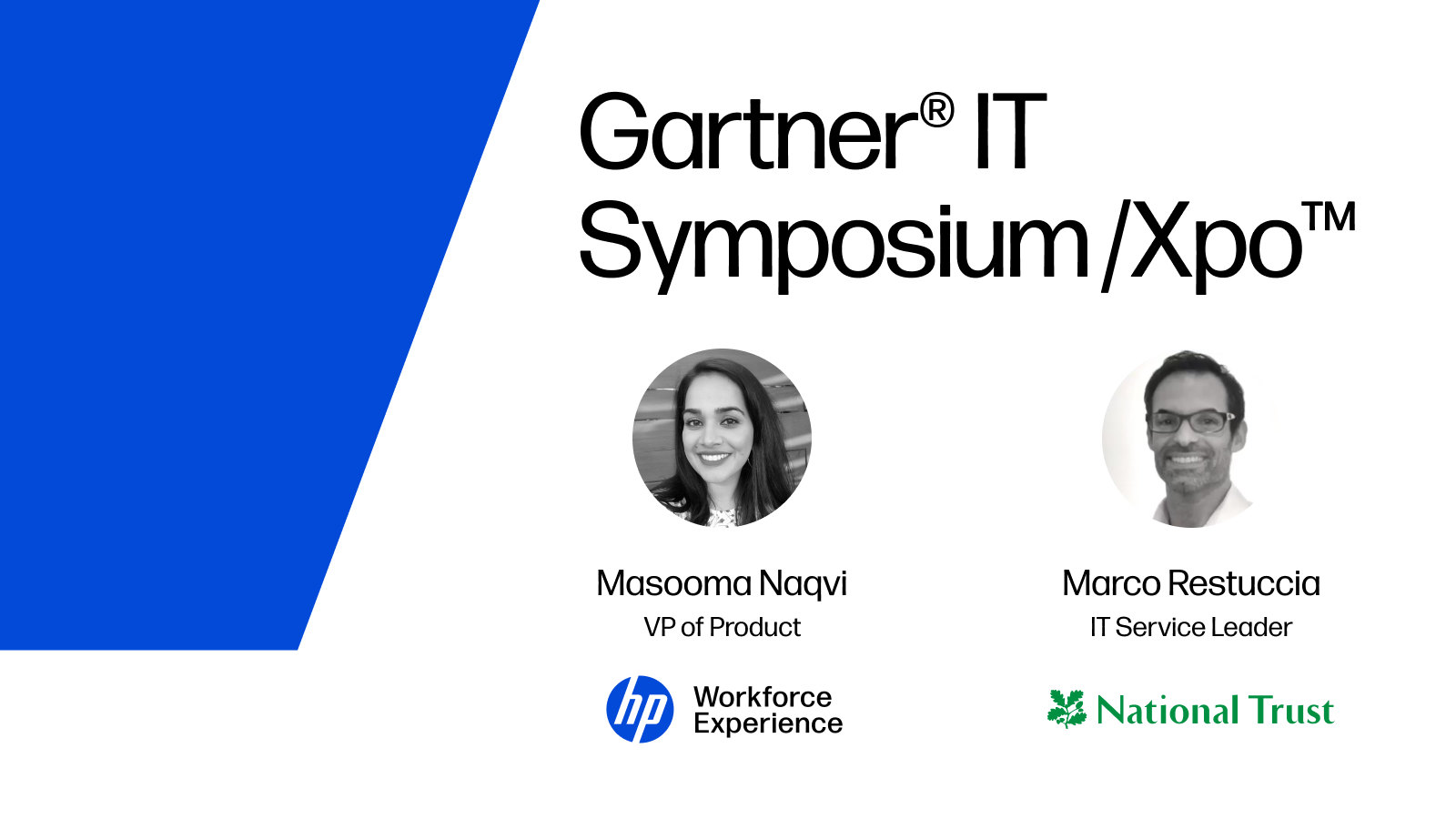
At this year’s event, HP’s Masooma Naqvi highlighted the need to rethink the CIO’s role for the next era of work.
This year’s Gartner IT Symposium/Xpo 2025 in Barcelona was a fantastic four-day event, packed with valuable learnings, strategic insights, and thought-provoking conversations. The conference dove deep into the priorities shaping the modern enterprise, with topics ranging from AI and cybersecurity to cloud, digital employee experience, and the evolving mandates of CIOs and IT executives.
In one of the standout sessions, Masooma Naqvi, VP of Product Management at HP Digital Services, was joined on stage by Marco Restuccia, Head of User Technology Services at the National Trust, to discuss how CIOs can transform the digital employee experience. Their session, The Strategic CIO Advantage: How Employee Experience Drives Business Value, explored how forward-thinking CIOs are preventing disruption before it happens and anticipating employee needs.
They shared real-world transformation stories, illustrating how the right mindset, tools, and KPIs can strengthen executive partnerships, elevate IT’s strategic value, and position CIOs as key drivers of business growth. Here are some of the key takeaways from the presentation.
Takeaway #1: The CIO’s Role Is Transforming From Device Manager to Architect of the Employee Experience
One of the strongest themes from the session was the redefining of the CIO’s mandate. Instead of simply managing devices and keeping systems running, CIOs now architect the entire digital employee experience (DEX).
Masooma explained that everyday digital tools increasingly frustrate employees through poor performance, slow issue resolution, and their ability to either support or hinder real work. As these friction points accumulate, the boundary between IT and HR becomes increasingly blurred. Both functions now share a unified mission: deliver a holistic experience that drives productivity, retention, and long-term business growth.
This shift means that CIOs need to operate differently. Instead of reacting to problems after they happen, they need to cut through operational chaos with greater visibility, proactive insights, and seamless manageability across every endpoint.
Takeaway #2: Digital Friction Is Eroding Productivity, Trust, and the Bottom Line
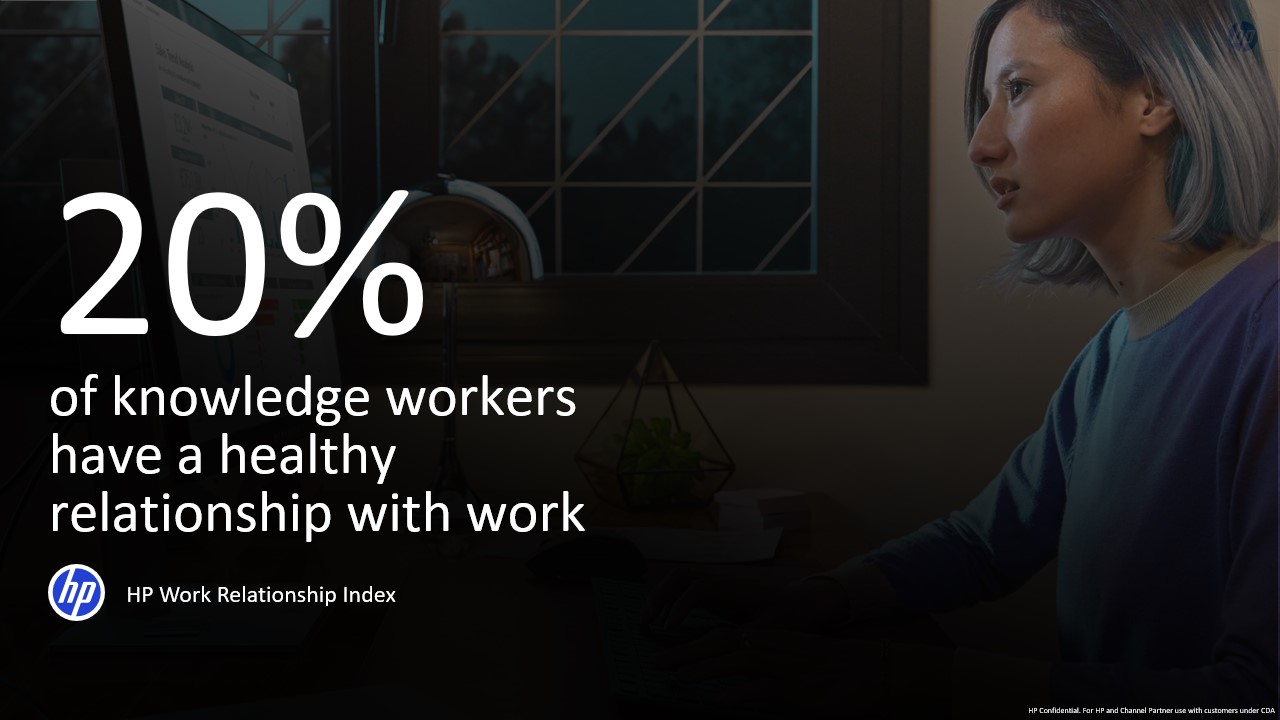
According to the HP Work Relationship Index 2025, only 20% of employees report having a healthy relationship with their work, down from 28% the previous year.
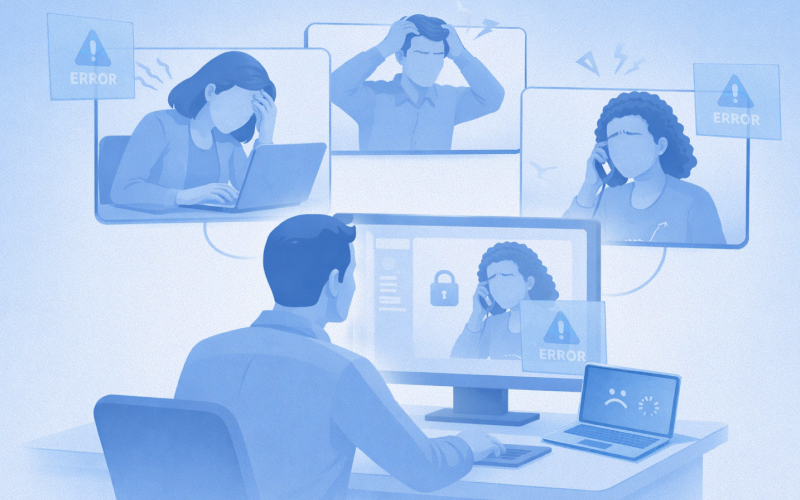
Much of this frustration stems from recurring issues with technology, including poor performance, slow resolution times, and inadequate collaboration experiences. Employees face constant workflow disruptions, and the impact is costly: nearly $30,000 per week in lost productivity for every 25,000 employees. Interruptions also derail collaboration across the 100 million meetings held each day, where one in five workers face performance issues despite companies spending $3 trillion a year on meetings.
The human impact is just as significant. Three out of four employees feel they lack the necessary tools, and nearly half no longer report technical issues because they don’t believe IT will help. With endpoint sprawl, limited resources, and human error piling on, IT teams remain stuck in reactive firefighting mode.
To break this cycle, CIOs must shift to a proactive model built on predictive intelligence and unified visibility across device fleets. Reducing digital friction is essential to rebuilding trust and improving performance.
Takeaway #3: Experience-Driven IT Is Now a Growth Engine
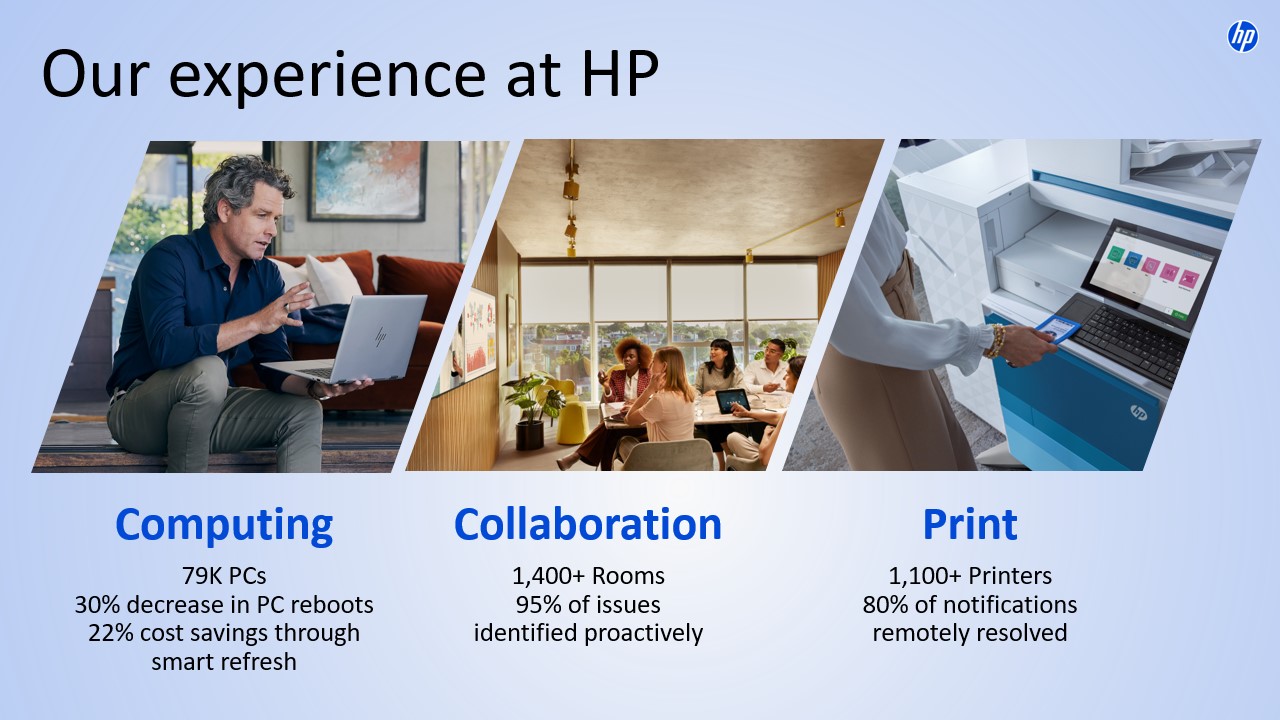
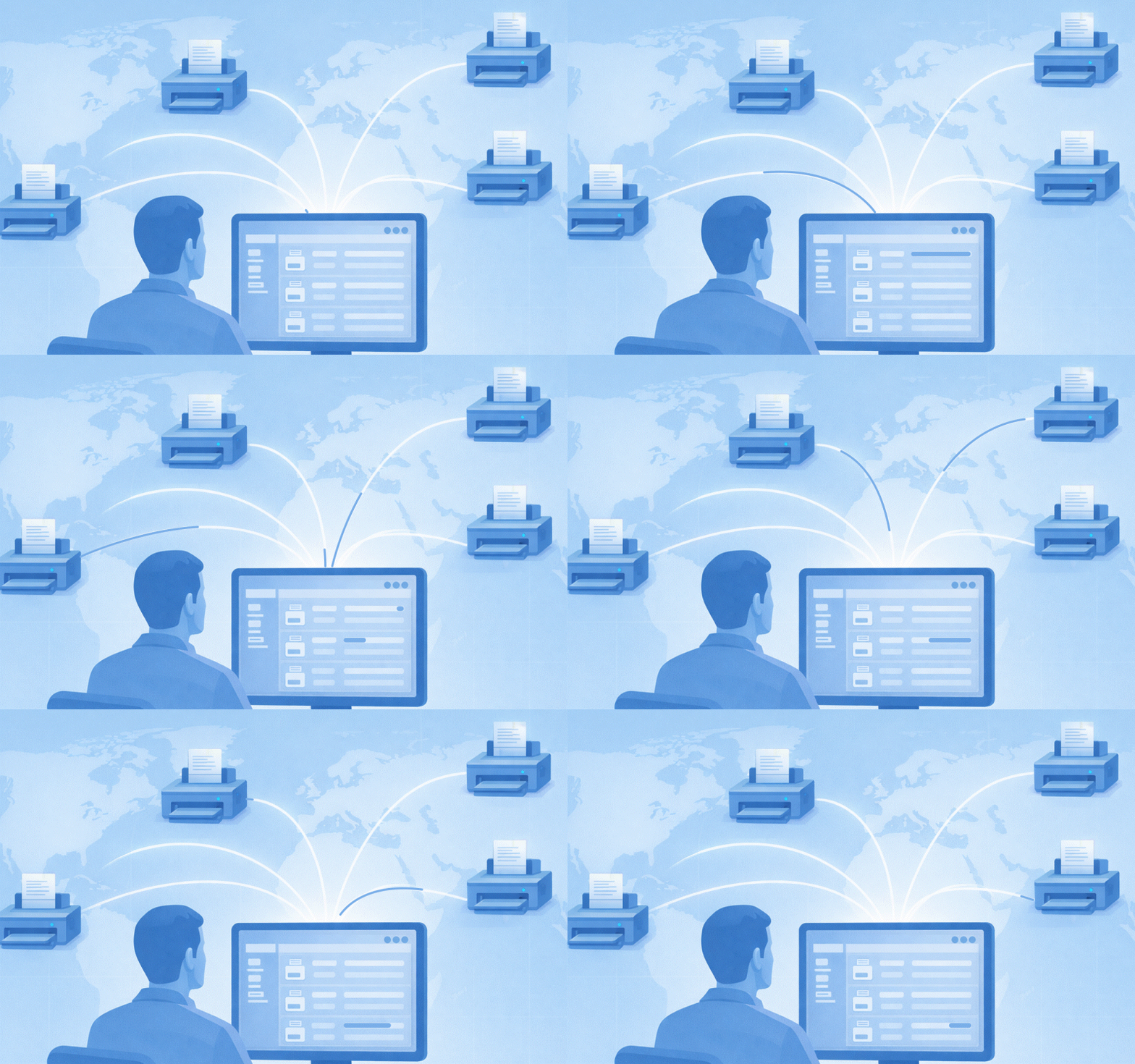
Another key takeaway was that CIOs need proactive, employee-first platforms to prevent issues before they impact productivity. For example, the HP Workforce Experience Platform (WXP) leverages device telemetry across PCs, printers, applications, and collaboration tools, providing IT with proactive insights and automation to optimize device fleets, detect and remediate IT issues, reduce costs, and improve the digital employee experience.
The impact is massive. When HP deployed WXP internally, our organization saw a 30% reduction in reboots, a 22% reduction in refresh costs driven by AI insights, and an 80% reduction in print issues requiring on-site support. Similarly, The University of Kansas Health System used WXP to improve employee sentiment, reduce refresh costs by more than $1,000 per device, and boost overall device performance across its 18,000-device environment.
Marco also shared how the National Trust, one of Europe’s largest conservation charities, uses WXP to match devices to diverse roles, shift from reactive tickets to proactive remediation, and advance sustainability goals (e.g., net-zero ambition) through granular power consumption data.
The Opportunity for CIOs Is Now
If there’s one thing this session made clear, it’s that CIOs now have the tools and data to improve the employee experience and turn IT into a true driver of performance and growth. With greater visibility and control, they can now shift from managing devices to shaping a more productive, trusted, and resilient workplace.
HP Workforce Experience Platform is a comprehensive digital employee experience solution that enables organizations to optimize IT for every employee’s needs.
Discover how it can transform your IT operations from a cost center to a business accelerator. Simply fill out the form below, and our team will be in touch soon.
From the blog
The latest industry news, interviews, technologies, and resources.





Frequently asked questions
Here's everything you need to know about WXP.
- What is the HP Workforce Experience Platform (WXP)?
- How does WXP work?
- Can WXP be customized to fit specific business needs?
- How is WXP modular?
- Is WXP compatible with different vendors and operating systems?
- How does WXP integrate with other IT tools to provide a more comprehensive solution?
- What is a Workforce Experience score?
- How is AI used within WXP?
- How can I buy WXP and find out about new releases?