
The HP Solutions Success Model: Delivering Compounding Value to IT Customers
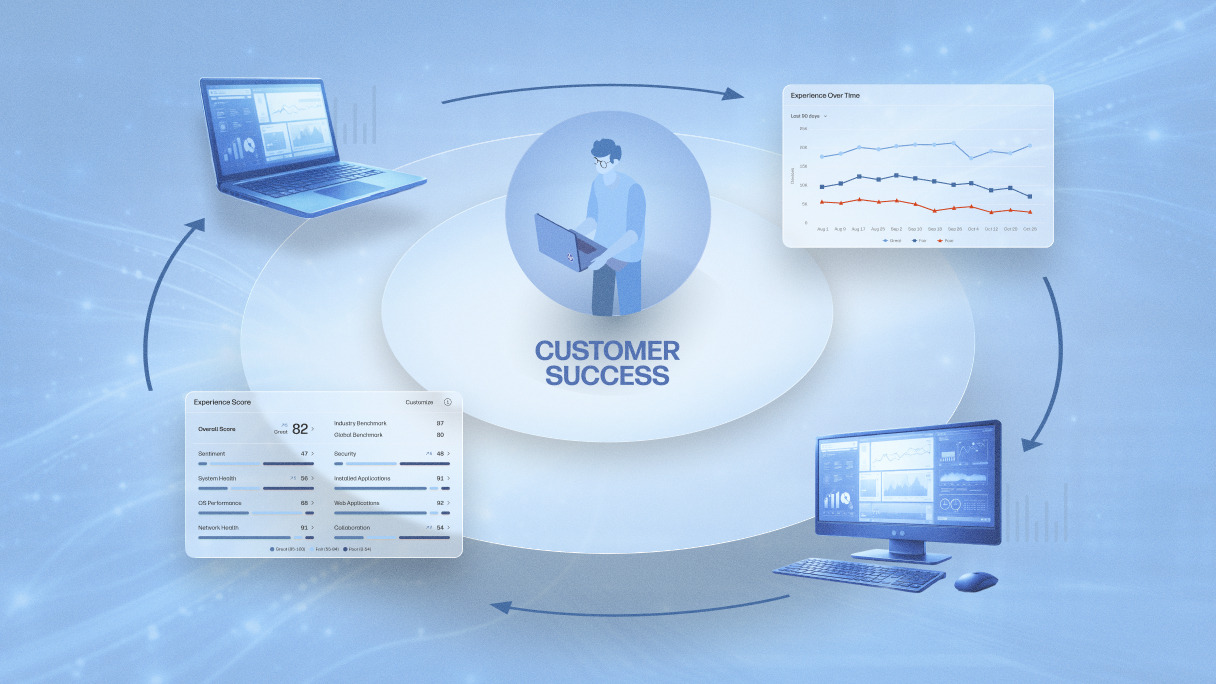
To counter rising IT spend, tighter budgets, and now a global memory shortage, our self-reinforcing model uses device analytics to help IT teams make smarter supply decisions.
This article was first published on LinkedIn.
When Einstein allegedly called compound interest the eighth wonder of the world, he captured the power of steady, compounding gains to generate extraordinary results over time. In much the same way, a well-designed flywheel—or “virtuous cycle”—acts as a compounding engine, where a self-reinforcing loop builds momentum and creates increasingly more customer value with every turn.
Here at HP, our team has developed a strategy to meet our IT customers’ evolving needs. Known as the HP Solutions Success Model, it leans into our strengths across hardware, software, and services to continuously simplify IT operations and ensure organizations have the right technology to keep employees happy and productive.
In a time when worldwide IT spending is expected to exceed $6 trillion, and IT leaders need every advantage they can get, the model helps to reduce digital friction, transform customer and partner relationships, and ultimately deliver more value per dollar of technology investment.
Why a Memory Shortage Raises the Stakes for Large Device Fleets
According to Gartner, total AI spending will reach a staggering $2.5 trillion in 2026, up 44% YOY.
However, the unprecedented build-out of AI data centers has created a severe global memory shortage, disrupting supply chains and causing DRAM and NAND prices to skyrocket. Counterpoint Research reports that memory prices have soared by 80% to 90% so far in Q1 2026 compared to Q4 2025.
Because DRAM and NAND are used in everything from PCs and laptops to mobile devices and collaboration equipment, devices are getting more expensive, and supplies are shrinking. IDC projects PC prices to rise by 4% to 8% and shipments to contract by 2.4% to 8.9% in 2026.
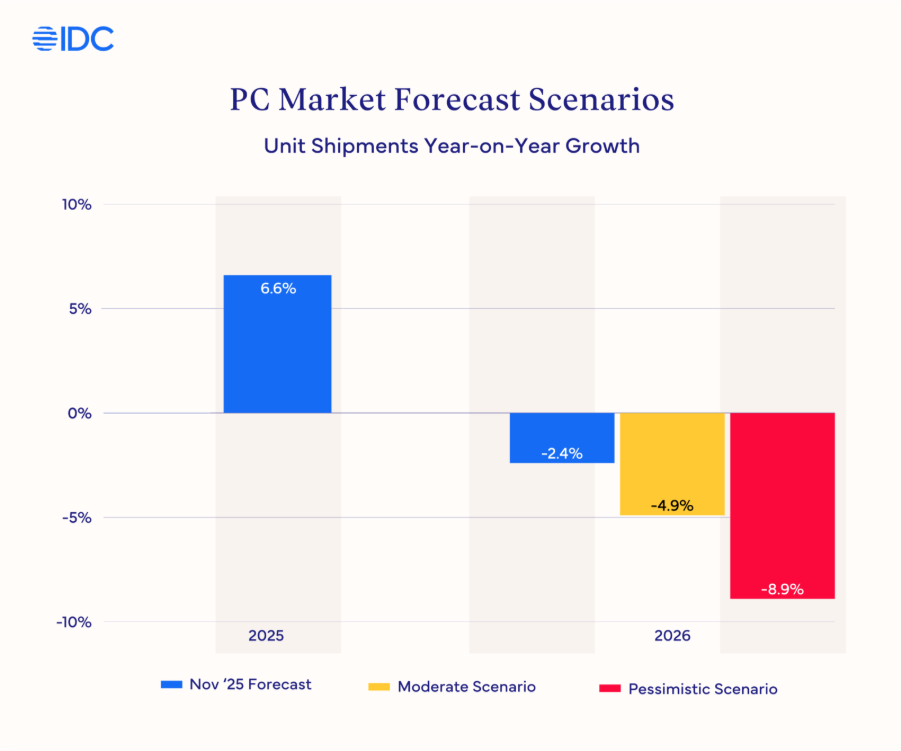
Source: IDC
With volatility affecting nearly every industry, IT leaders managing large device fleets must rethink how they procure, deploy, maintain, and retire IT assets to stretch their dollars further. It’s now imperative for organizations to:
- Analyze device usage data to target specific memory upgrades
- Fix issues before replacing devices
- Extend device lifecycles
- Consolidate tools and platforms
- Track IT assets to avoid overbuying
- Identify software that improves device performance
- Refresh device fleets based on employee needs
That’s where HP comes in.
Working Smarter for CIOs and IT Leaders
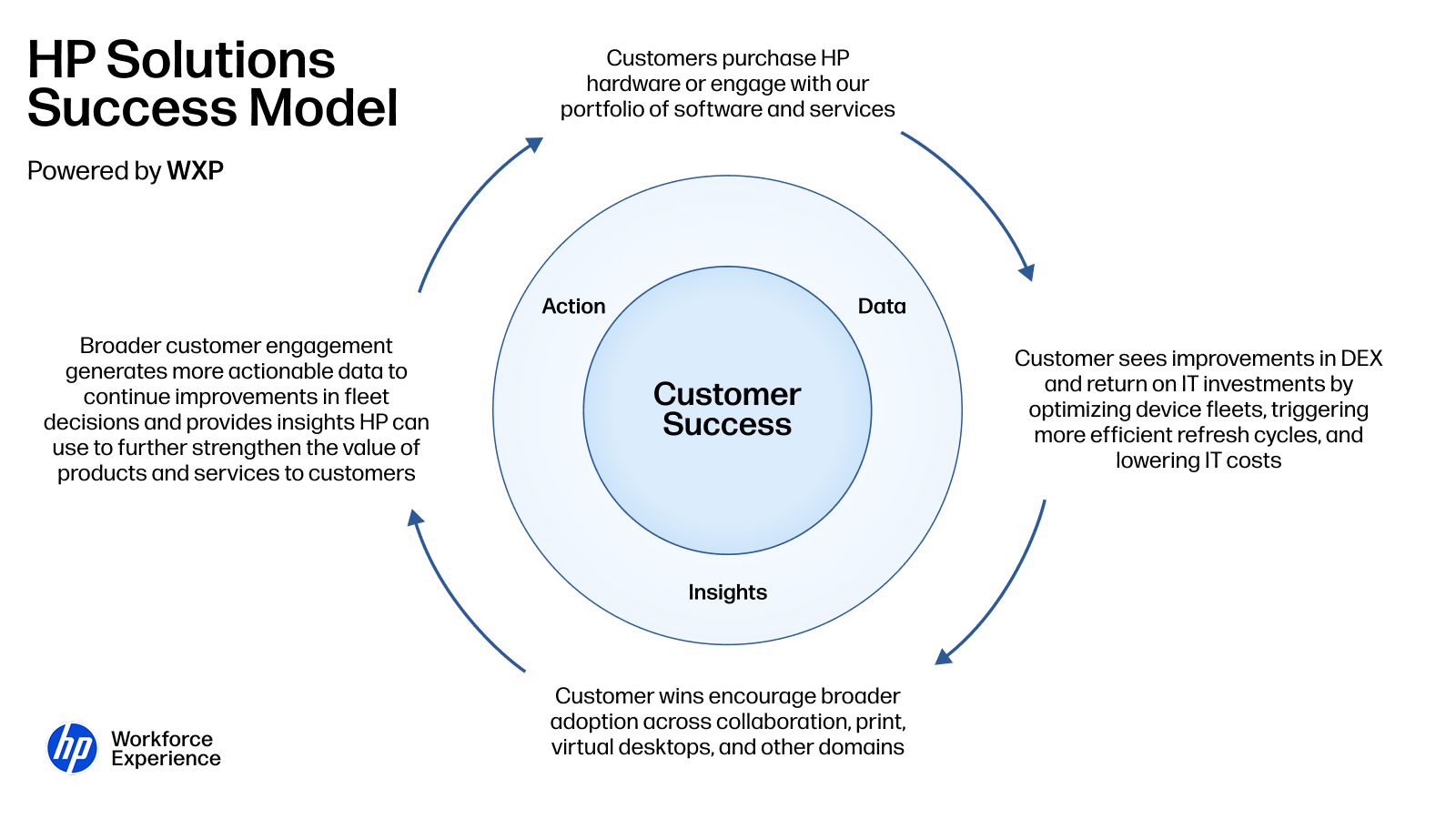
The HP Solutions Success Model helps enterprise CIOs and IT leaders manage complex technology environments. It’s powered by the HP Workforce Experience Platform (WXP), which uses device telemetry and AI to turn billions of data points into actionable insights.
Here’s how it works:
- Customers purchase HP hardware, software, or services. For example, HP Solutions like device lifecycle management, print management, and endpoint security Protect and Trace are all accessible through WXP.
- As customers engage with our offerings, WXP captures telemetry to build a complete picture of fleet performance and employee usage.
- The platform then turns that data into actionable insights, optimizing refresh cycles and simplifying fleet and software management. HP proactively detects and fixes IT issues, reduces friction, enhances the employee experience, and boosts productivity and engagement.
- When customers see tangible results, their trust in HP grows. That opens the door to adopting more solutions across collaboration, print, virtual desktops, and other domains.
- With each new layer of engagement, WXP gathers more telemetry. Better data helps teams rightsize device fleets, extend device lifecycles, and reduce unnecessary spend. It also drives innovation across HP’s hardware, software, and services—bringing new customers into the ecosystem and keeping the model spinning.
By taking a true end-to-end approach to optimizing the employee experience, we transform traditional vendor relationships into long-term partnerships. HP’s endpoint expertise and data scale give IT teams a complete picture of how devices perform and how employees interact with technology. Over time, the model delivers compounding value to enterprise customers.
Over time, our model delivers compounding value to enterprise customers.
Reducing Digital Friction with Every Turn
Success means solving IT issues and improving DEX. As adoption grows, HP captures more telemetry and uses it to strengthen lifecycle planning, device performance, and long-term technology investments.
That advantage matters even more as IT leaders stare down supply chain disruptions and tighter memory supply. With DRAM and NAND prices rising, CIOs must focus on preserving performance and controlling costs across large device fleets.
Enterprises now have an opportunity to operate with greater visibility and control. Backed by deep telemetry and customer trust, we aim to help organizations navigate volatility and get more return from every technology dollar.
HP Workforce Experience Platform is a comprehensive digital employee experience solution that enables organizations to optimize IT for every employee’s needs.
Discover how it can transform your IT operations from a cost center to a business accelerator. Simply fill out the form below, and our team will be in touch soon.
From the blog
The latest industry news, interviews, technologies, and resources.



Frequently asked questions
Here's everything you need to know about WXP.
- What is the HP Workforce Experience Platform (WXP)?
- How does WXP work?
- Can WXP be customized to fit specific business needs?
- How is WXP modular?
- Is WXP compatible with different vendors and operating systems?
- How does WXP integrate with other IT tools to provide a more comprehensive solution?
- What is a Workforce Experience score?
- How is AI used within WXP?
- How can I buy WXP and find out about new releases?