The IT Buyer’s Playbook: Finding ROI in Lasting Partnerships

Selecting a technology is more about forming a long-term relationship than buying a tool. Here’s how to find vendors delivering more value across the IT tech stack.
This article was first published on LinkedIn.
When IT organizations invest in new technologies, they seek tools that simplify their work, increase efficiency, reduce costs, and streamline management.
Unfortunately, many solutions that look good on paper often fail to meet customer needs. What, in theory, should simplify daily IT work and deliver tangible value usually ends up slowing teams down.
What if there was a better way?
When assessing technologies, IT buyers should think beyond features and evaluate vendors as long-term business partners. The best ones invest in the right capabilities, pass their competitive advantages down to customers, and build their businesses to deliver lasting value.
For example, GitHub’s developer ecosystem has become a cornerstone of modern IT, connecting millions of developers, repositories, and integrations that expand through network effects. ServiceNow’s IT service management platform centralizes workflows and integrates across the IT stack, making it the backbone of many organizations’ IT operations.
These businesses invest in durable strengths that enhance their offerings, making them stronger, more reliable, and more valuable over time. Importantly, they demonstrate how economic moats can pass benefits down to customers.
Why a Vendor’s Product Strategy Quietly Drives ROI
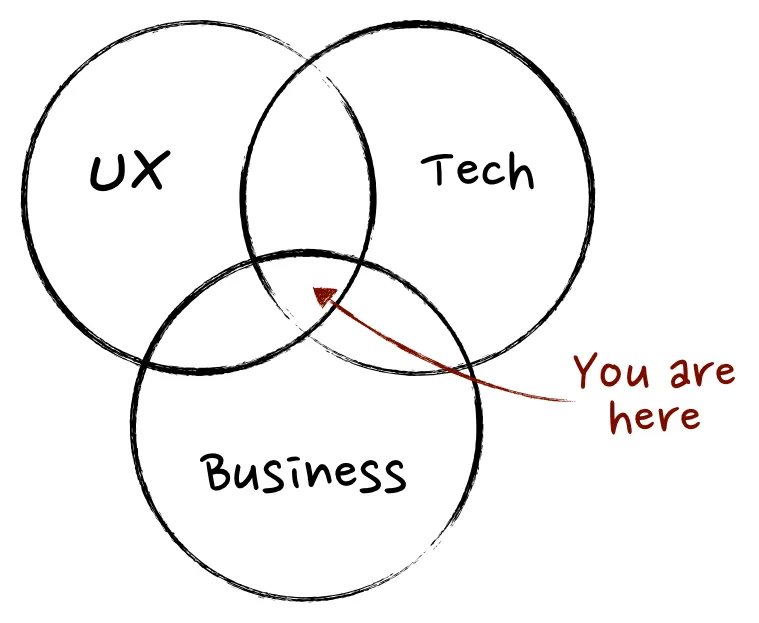
Product management is one of the few disciplines where business value, tech innovation, and customer delight (UX) intersect. When assessing vendors, it’s essential to understand how their product teams approach customer segmentation to meet customer needs.
Behind the scenes, product leaders are constantly asking questions like:
- Who is the core customer?
- What’s the best way to reach them?
- Should they focus on a specific vertical or serve all customers?
- When do they decide to specialize or not?
These answers shape the product roadmap, which ultimately determines how well their solutions align with your IT organization and drive ROI. The next step is to assess whether a vendor can deliver on its promises over the long term.
1. Are they investing where it counts?
Enterprise IT has a high cost of entry. The key question is whether the product team is building for the long term and investing where it matters most. Whether it’s security, compliance, integrations, infrastructure, or critical features, their goals should be to lower the total cost of ownership (TCO), boost productivity, deliver value at scale, and/or surpass competitors with differentiated offerings.
However, any product leader will tell you that the dilemma of where to allocate time, energy, and resources has always been one of the most challenging things to get right. When every choice carries an opportunity cost, they have to weigh the potential trade-offs and decide where to focus, where to specialize, and where to hold back.
As product expert Marty Cagan puts it:
“Product is hard.”
2. Do they have a durable competitive advantage?
The next question is whether a vendor has built a sustainable advantage that will continue to pass benefits on to the IT buyer over time. Of the five main sources that build and widen a moat, three translate directly into benefits for IT buyers.
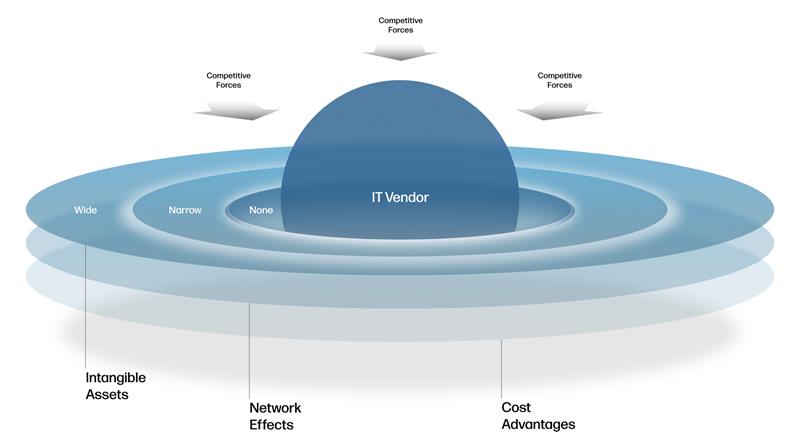
Intangible assets signal trust, quality, and innovation. Cost advantages enable vendors to reinvest in the product while maintaining competitive prices. Network effects foster a healthy ecosystem, characterized by improved interoperability, broader industry support, and reduced risk for IT buyers. These moats ensure the vendor can keep innovating while delivering the performance, stability, and support IT teams want.
3. Are they gaining market traction?
Great products solve real problems, and growing adoption suggests that the solution is reliable, well-supported, and consistently delivers value across diverse environments. There’s also velocity. Companies that aren’t fighting for survival or have a differentiated portfolio can invest in high-value, longer-term solutions. Customers may need to embark on a journey with the vendor, but strong traction and stability reduce risk, ensuring more reliable product evolution and support.
In contrast, shrinking or stagnant usage indicates the product isn’t meeting customer needs. Furthermore, a solution that’s constantly at risk of sale or merger creates uncertainty and slows innovation.
According to famed investor Warren Buffett, one of the best ways to assess a business is to simply ask around:
- If your IT team had to depend on one competitor in this market for the next decade, which one would you trust and why?
- And if you had to avoid one for the next decade, which one would it be and why?
WXP Builds Stronger, High-Value Partnerships
Here at HP, we’re a product-led organization focused on meeting customer needs and continuously improving how our products deliver value, scale, and differentiation. The HP Workforce Experience Platform (WXP) is our AI-powered, cloud-based solution that provides IT with proactive insights and automation to optimize device fleets, detect and remediate IT issues, reduce costs, and improve the digital employee experience (DEX).
As one of the few OEMs focused on DEX, our moat comes from hardware expertise, deep telemetry, and data scale that competitors can’t match. We have greater visibility into device health, user experience, and lifecycle needs, enabling us to refine the platform more effectively.
They also reinforce our intangible assets, such as trusted security, reliability, and patented hardware and software technologies. As more customers adopt WXP, network effects strengthen the ecosystem and data quality, while our cost advantages support continued reinvestment in innovation. Together, these forces create a virtuous cycle that steadily increases the value we deliver to our customers.
Conclusion
IT teams want solutions that are valuable, usable, feasible, and viable. Choosing vendors comes down to understanding how they build, where they invest, and whether they have durable advantages that strengthen their offerings over time. Real moats create benefits that are passed on to IT organizations as their needs grow.
For IT buyers, choosing the best solution is critical. Ultimately, the right choice can lead to improved performance, higher ROI, and reduced complexity across the IT tech stack.
HP Workforce Experience Platform is a comprehensive digital employee experience solution that enables organizations to optimize IT for every employee’s needs.
Discover how it can transform your IT operations from a cost center to a business accelerator. Simply fill out the form below, and our team will be in touch soon.
From the blog
The latest industry news, interviews, technologies, and resources.





Frequently asked questions
Here's everything you need to know about WXP.
- What is the HP Workforce Experience Platform (WXP)?
- How does WXP work?
- Can WXP be customized to fit specific business needs?
- How is WXP modular?
- Is WXP compatible with different vendors and operating systems?
- How does WXP integrate with other IT tools to provide a more comprehensive solution?
- What is a Workforce Experience score?
- How is AI used within WXP?
- How can I buy WXP and find out about new releases?