The Hidden Debt in IT Operations
Why cumulative digital friction creates a “silent tax” that drains employee engagement and productivity.
This article was first published on LinkedIn.
Anyone familiar with the term technical debt knows that, in software development, taking shortcuts and using quick fixes eventually creates larger problems that cost more to fix over time.
In IT, another form of debt accumulates when organizations fail to optimize how employees interact with workplace technology. With outdated systems, fragmented tools, low technology adoption, and poor infrastructure, the so-called “interest” on the debt can show up as:
- Repeated disruptions
- Slower workflows
- Endless helpdesk tickets
- Shadow IT and employee workarounds
- Poor customer experience (CX)
- Elevated security and compliance risk
- IT firefighting
- Higher attrition
Gartner warns that digital friction is a silent killer of workforce productivity, and Gallup reports employee engagement has fallen to a decade-low, with only 31% of U.S. workers engaged.
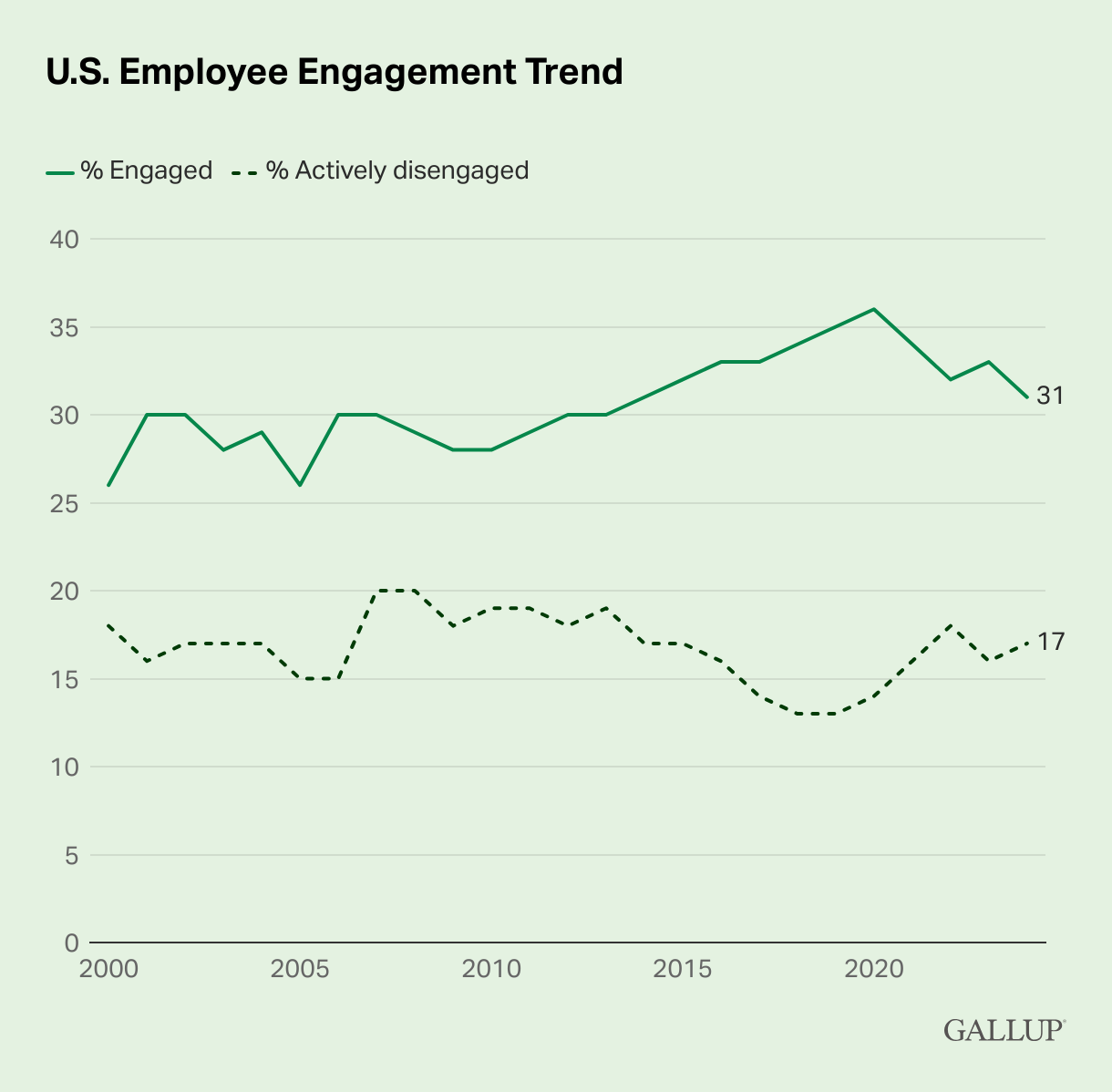
Source: Gallup
Together, these trends point to a growing issue that quietly builds as everyday friction goes unresolved.
Paying down experience debt
Addressing experience debt starts with questioning assumptions that no longer serve how people work. IT organizations need visibility into where friction begins and the impact on productivity and sentiment.
The next step is to pay down the debt. Here are a few ways organizations can rethink their IT approach.
Make IT Dead Simple
The modern employee experience is getting worse, not better. Workers today must navigate fragmented tools, SaaS sprawl, constant disruptions, slow issue resolution, and technology that fails to keep pace with how and where they work. According to research by Johns Hopkins, U.S employee well-being is the lowest it’s been since 2019.
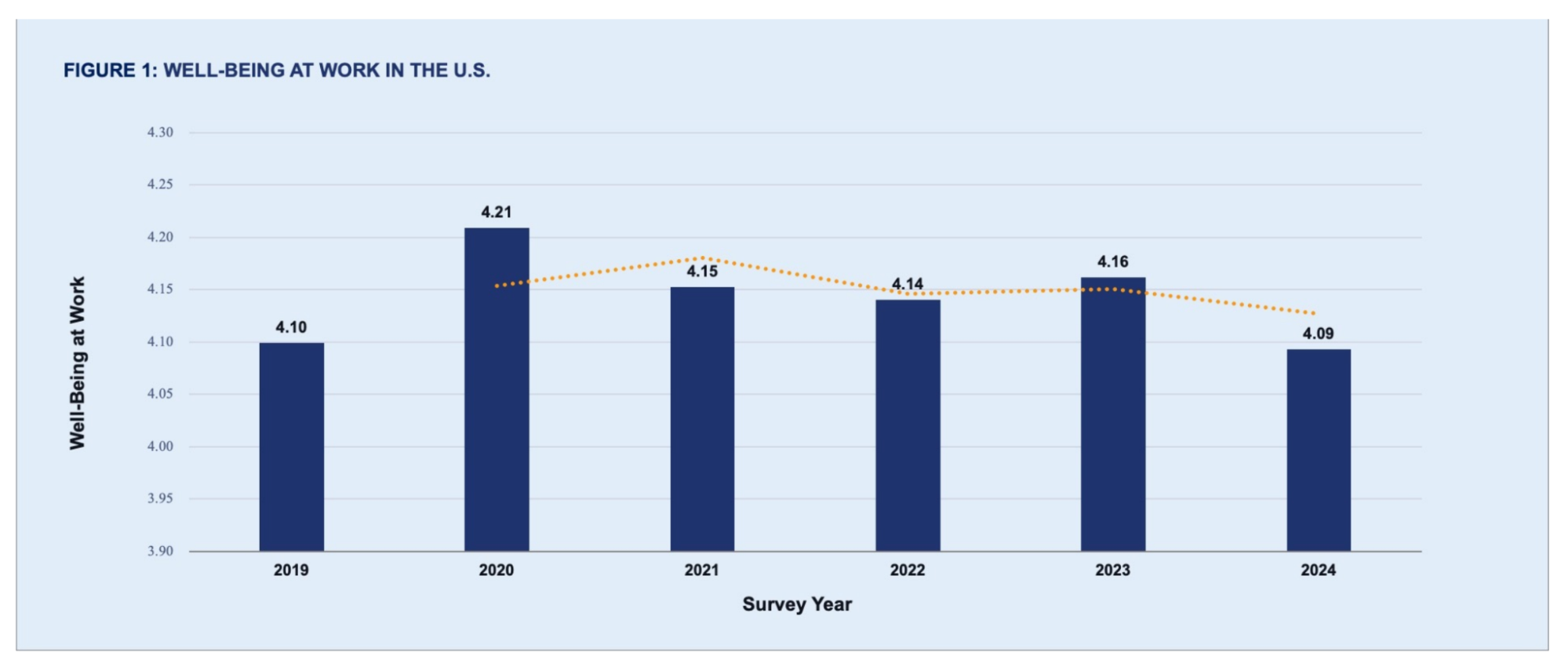
Source: Johns Hopkins
Meanwhile, CIOs and IT leaders must meet rising employee expectations while managing increased complexity, constrained budgets, reduced headcount, and the need to maintain secure and reliable systems. Over time, small process decisions, workarounds, and outdated workflows harden into the “company way,” quietly embedding friction into everyday work.
To simplify IT, organizations need to be ruthless by removing complexity and making technology easier to manage and use. That means moving beyond tools that focus only on devices and support tickets, and instead addressing how employees experience their systems, workflows, and devices. Clearing experience debt comes from understanding how people use technology, aligning tools to employee needs, and breaking down silos to enable cross-functional teamwork.
Establish Proactive IT as the Default
“The more problems teams face, the more money gets poured into tools and services. Vendors thrive when IT departments manage and close a never-ending stream of tickets, not when problems are actually solved.”
- Faisal Masud, President of HP Digital Services
Predictive insights and unified fleet visibility help teams prevent issues before they escalate, shifting IT from constant firefighting to truly fireproofing the employee experience. IBM found that proactive incident management can eliminate up to 80% of employee time wasted on false positives.
For every organization, the goal is to make IT truly invisible. Proactive—and even predictive—insights and automation surface issues early, so teams can intervene before problems escalate. By moving away from reactive IT and making proactive IT management the default, organizations can slow the accumulation of experience debt and keep employees happy and productive.
Fix Everything, Once
What value does an IT help desk deliver if the same issues keep returning?
In IT, it is far more effective to measure twice and cut once. Fixing issues the right way means leveraging automation and intelligent workflows to detect anomalies, understand their root causes, eliminate repetitive issues, and remove constraints that slow resolution.
Some OEMs collect telemetry data directly from sources such as PCs, printers, collaboration tools, and digital workspaces. That depth enables smarter triage and faster remediation, so problems get fixed the first time, and employees stay engaged.
According to Gallup, engaged employees lead to higher profitability, increased productivity, reduced absenteeism, and lower turnover rates.
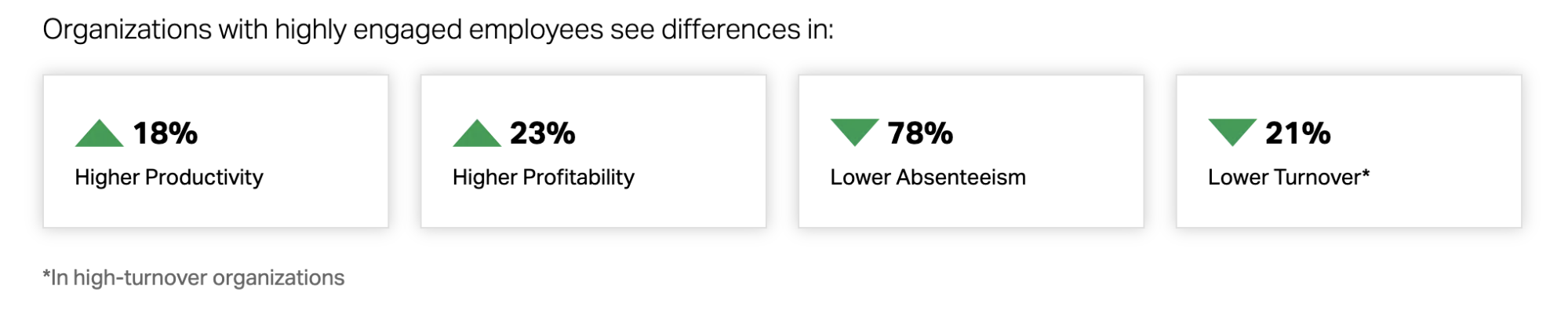
Source: Gallup
Give People the Best Tools to Do Their Best Work
“If we could simply get everyone to agree on what our objectives were and to understand what we were trying to do, then—starting with people who want to work, and providing them with the right conditions and resources to do it—we could turn them all loose and they would move along in a common direction.”
- David Packard, Co-Founder of Hewlett-Packard
When technology fails to meet employee needs, they turn to shadow IT and unofficial tools, increasing security risks and eroding trust in IT systems. Rich telemetry data gives IT the visibility to close that gap by understanding how employees use devices and where experience breaks down:
- IT replaces devices based on real-world performance and user impact, not age alone
- Targeted upgrades extend device lifespans and delay unnecessary capital spend
- Usage patterns and persona-based insights help IT assign the right devices to the right users
- Smarter refresh, upgrade, and allocation decisions lower the total cost of ownership
To pay down experience debt, IT leaders require greater visibility and control over their fleets. Devices that stay productive longer cost less to operate and better support the people who rely on them.
Optimize Experience, Clear Your Debt
Experience debt is a silent and pervasive productivity killer. It accumulates quietly through digital friction and can become normalized over time.
Paying down this debt requires a fundamental shift in how organizations think about IT, from reacting to issues to preventing them, from closing tickets to fixing root causes, and from managing devices to supporting how people actually work. With better visibility, data-driven decisions, and a focus on simplicity, IT can remove friction at scale and create a workplace that truly supports today’s employees.
HP Workforce Experience Platform is a comprehensive digital employee experience solution that enables organizations to optimize IT for every employee’s needs.
Discover how it can transform your IT operations from a cost center to a business accelerator. Simply fill out the form below, and our team will be in touch soon.
From the blog
The latest industry news, interviews, technologies, and resources.






Frequently asked questions
Here's everything you need to know about WXP.
- What is the HP Workforce Experience Platform (WXP)?
- How does WXP work?
- Can WXP be customized to fit specific business needs?
- How is WXP modular?
- Is WXP compatible with different vendors and operating systems?
- How does WXP integrate with other IT tools to provide a more comprehensive solution?
- What is a Workforce Experience score?
- How is AI used within WXP?
- How can I buy WXP and find out about new releases?