Beyond Break-Fix: How Professional Services Deliver Value to Enterprise IT

In an era of talent shortages and budget constraints, partnering with trusted IT experts can empower CIOs to drive innovation and deliver exceptional employee experiences.
This article was first published on LinkedIn.
For better or worse, the word “consulting” often elicits mixed reactions from IT decision makers. Some see it as helpful, while others think it means being told what they already know, but with nicer PowerPoint slides. This view still lingers in many of today’s organizations.
But consulting doesn’t have to be polarizing. When done right, external experts can offer much more than advice.
They can help organizations generate new ideas and fresh thinking by drawing on their experience working with thousands of customers facing similar challenges. With expert knowledge and specialization, consultants can ask the right questions to uncover businesses’ biggest pain points. They can share proven strategies, accelerate time to value, and guide IT teams toward better ways of reaching their goals—ways they may not have found on their own.
More importantly, professional services can help offset the growing IT talent shortage. According to McKinsey, 87% of companies worldwide report experiencing skill gaps now or expect to within the next five years.
The Extraordinary Challenges Facing IT Today
The brutal truth about enterprise IT is that today’s CIOs need to do more with less. Leadership expects them to keep the lights on while simultaneously driving transformation. In addition to IT talent shortages, some of the challenges include:
Hybrid work has only made things harder. Employees want seamless technology everywhere—in the office, at home, or in between—forcing IT teams to manage more devices and complexity without adding budget or headcount.
It’s an untenable situation for IT leaders. According to TechTarget, 78% of organizations recently abandoned projects because they didn’t have employees with the necessary IT skills to complete them. By 2026, the total losses could reach an estimated $5.5 trillion.
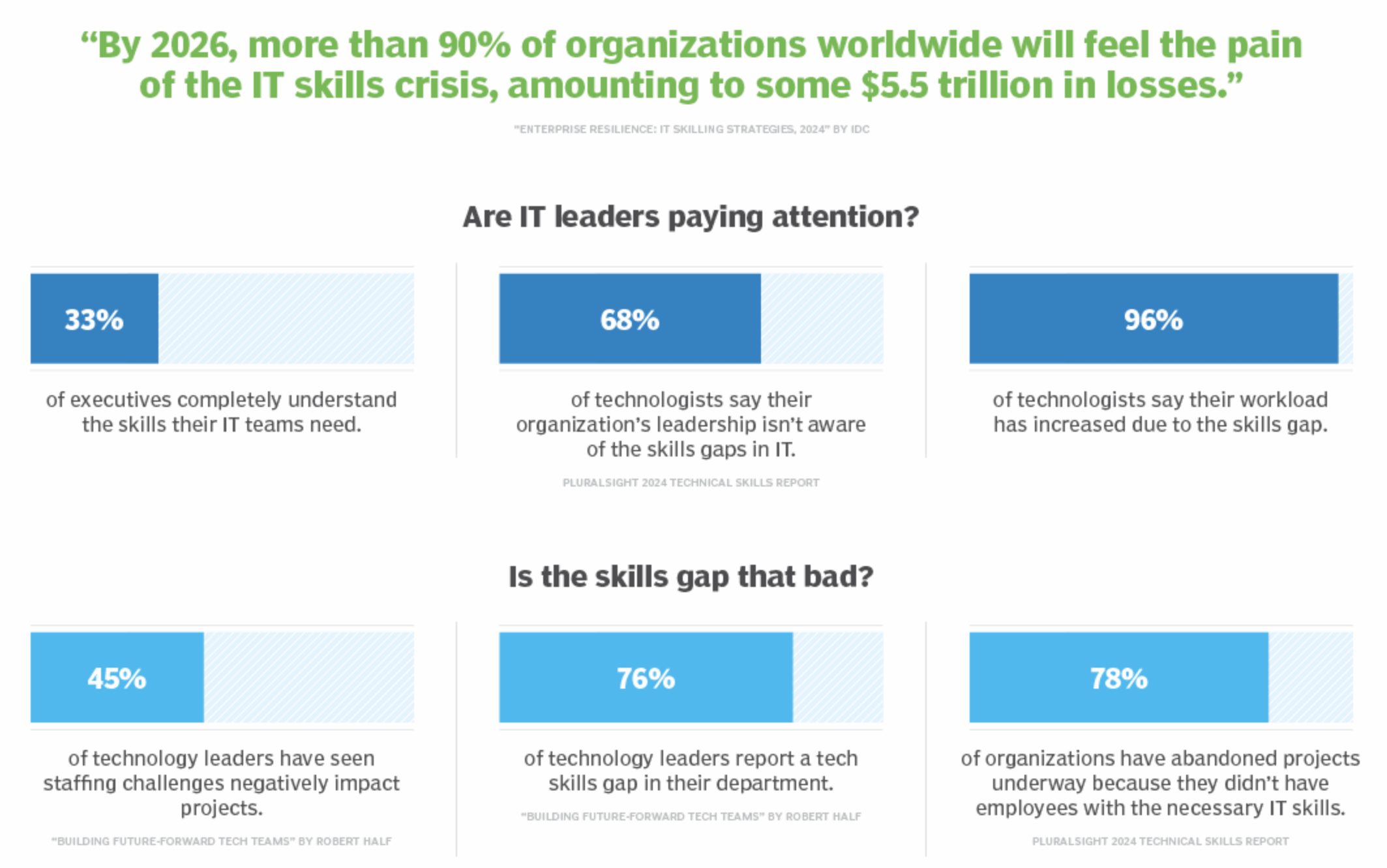
Source: TechTarget
To make matters worse, many organizations are stuck with managed service providers that aren’t meeting expectations. Research shows that 80% of enterprises are frustrated with their current providers and plan to replace them within the following year.
Going Beyond Traditional Consulting
After 25 years in the technology services industry, I’ve witnessed the evolution of managed services from the inside. To meet today’s challenges, IT consulting must go beyond planning, implementing, and optimizing technology solutions to drive meaningful outcomes for employees and the bottom line.
There needs to be a fundamental shift from a reactive “break-fix” mentality to delivering a proactive, seamless digital employee experience (DEX). That means anticipating and resolving issues before they disrupt work and enhancing productivity and engagement. According to Forrester, employees who are satisfied with technology that enables access to data, collaboration, and mobility are more likely to solve problems independently and stay engaged. This results in stronger retention, greater advocacy, and better customer experiences.
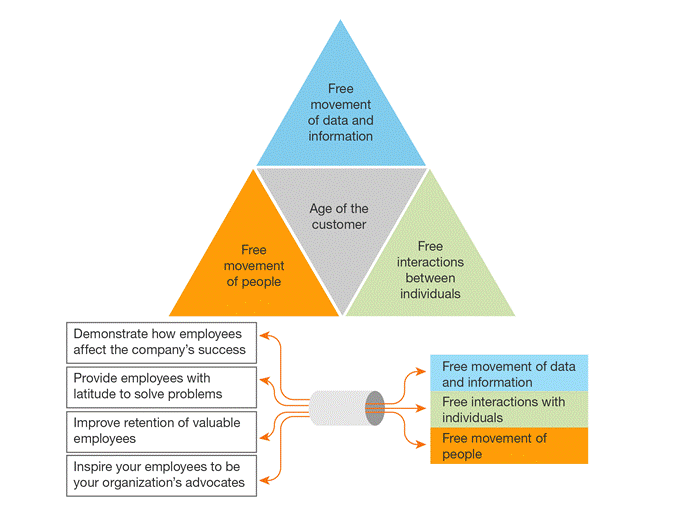
Source: Forrester
An Intro to HP Professional Services
Here at HP, we take a different approach to consulting. HP Professional Services is a comprehensive consulting practice that helps organizations transform their digital employee experiences through strategy and design, device configuration, proactive monitoring and management, and additional on-site support and hardware exchange services.
The HP Workforce Experience Platform (WXP) is the backbone, a device and OS-agnostic DEX solution that uses telemetry data to deliver real-time insights, predictive analytics, and proactive issue resolution that keeps employees productive and engaged.
How it works
Our approach begins with open-ended workshops designed to surface goals, challenges, and opportunities. From there, the focus shifts to key areas like user experience, infrastructure, workflows, and device performance.
Proven frameworks like ITIL and TOGAF guide our process. Combining what we observe, such as how employees use their tools, with telemetry data on app usage, system slowdowns, and network performance, gives us a clear view of what’s working and what needs improvement. When required, we conduct hands-on audits, whether walking through conference rooms or monitoring PC and print usage across departments.
These insights form the foundation of our five-pillar methodology:
- Strategy – Understanding high-level direction and future-state vision
- End-user experience – Analyzing user personas, sentiments, and baseline metrics
- Technology – Auditing infrastructure, apps, and devices to align with experience goals
- Operations – Reviewing workflows and how people interact with systems daily
- Governance – Evaluating security, change management, and policy alignment
This comprehensive model helps organizations build an actionable roadmap. Whether you execute it internally or ask us to assist, the goal is to define where you are, where you’re going, and how to get there.
Transforming IT Into a Competitive Advantage
Professional services can be a strategic multiplier. By augmenting internal teams with specialized expertise and bringing cross-industry insights to complex challenges, professional services can free IT leaders to focus on what matters most: driving better business outcomes.
The organizations that will thrive will not be those with the biggest IT budgets or teams. They will be the ones who know how to strategically leverage partnerships to turn their limitations into durable competitive advantages.
Here at HP, we’re ready to help you transform. Contact us to learn more and to get started with the right professional services partnership.
HP Workforce Experience Platform is a comprehensive and modular digital employee experience solution that enables organizations to optimize IT for every employee’s needs.
Subscribe for future product release updates and the HP Workforce Experience Blog to learn how to optimize your IT capabilities today.
If you want to learn more about the HP Workforce Experience Platform, we would love to speak to you! Simply fill out the form below, and a team member will be in touch.
From the blog
The latest industry news, interviews, technologies, and resources.



Frequently asked questions
Here's everything you need to know about WXP.
- What is the HP Workforce Experience Platform (WXP)?
- How does WXP work?
- Can WXP be customized to fit specific business needs?
- How is WXP modular?
- Is WXP compatible with different vendors and operating systems?
- How does WXP integrate with other IT tools to provide a more comprehensive solution?
- What is a Workforce Experience score?
- How is AI used within WXP?
- How can I buy WXP and find out about new releases?