
Artificial intelligence (AI) is revolutionizing IT operations, offering unprecedented opportunities for efficiency and innovation. As we move into 2025, integrating AI for IT operations is becoming essential for organizations aiming to improve the digital employee experience. This article explores three key use cases of AI in IT operations, providing expert insights and practical applications to help businesses optimize operations and stay ahead of the curve.
Use Case #1: Support IT with better visibility and remediation
Transparency and visibility are crucial for building trust and ensuring efficient IT operations. With AI, companies can analyze vast amounts of data and identify trends that might otherwise go unnoticed. Similar to machine learning solutions, AIOps solutions like the Workforce Experience Platform (WXP) can analyze telemetry within a massive fleet of PCs, printers, and other endpoints, then take the solution a few steps further by identifying issues, prescribing fixes, and proactively implementing them.
“AI is fantastic for analyzing data or text and spotting trends that IT would otherwise miss. Our customers always need to do more with less, so having a set of AI-enhanced eyes on their data can really improve their efficiency and help them make better decisions.”
Nathan Kofahl
Director of Software Product Management for Endpoint Management Tools and Services @ HP
By leveraging AI, IT teams can gain deeper insights into their operations, enabling them to make more informed decisions and improve overall efficiency. They can also use AI solutions and automation to identify issues and enforce patches across a vast amount of devices. This approach prevents issues from escalating and fosters a great digital employee experience within the organization.
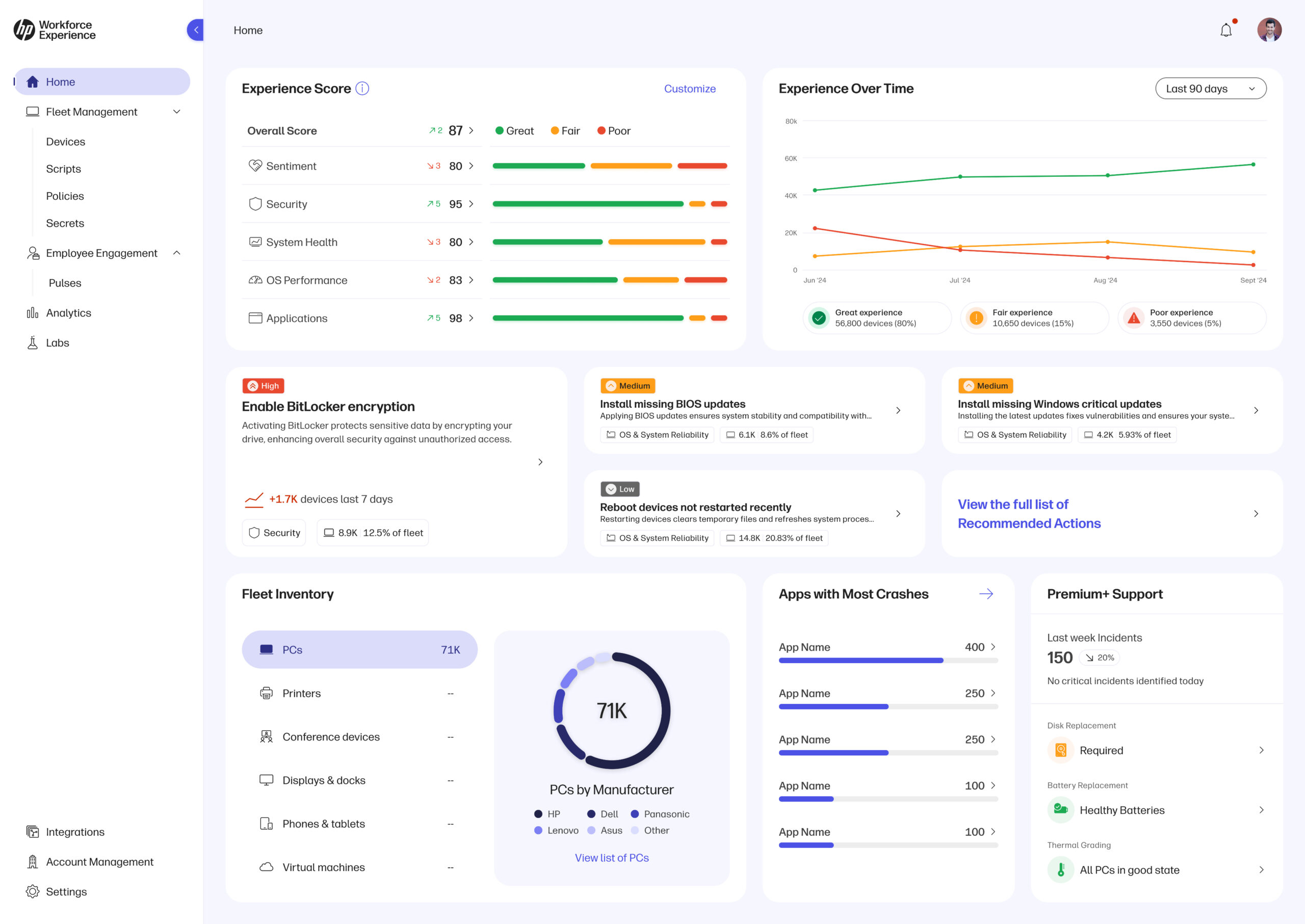
The HP Workforce Experience Platform (WXP) is an AI solution that gives IT an eagle’s eye view of devices, identifies issues, and proactively enforces patches to improve the digital employee experience.
Use Case #2: Automate tasks and eliminate “boring” work
Automation is one of the most significant benefits of AI for IT operations. By automating repetitive and mundane tasks, artificial intelligence and allows IT professionals to focus on more strategic and value-added activities with generative AI and AIOps. According to research by Stanford and MIT, GenAI tools helped boost worker productivity at one tech company by an average of 14%, including a 34% improvement for novice and low-skilled workers. Organizations can also achieve significant cost savings.
“We’ve been able to automate a lot of the tasks and also use generative AI to answer employees’ questions… because it’s boring work. It’s horrible work to have to keep solving IT problems that have been solved a million times before. Now, we’ve automated a bunch of them, used AI to fix it.”
Nikesh Arora
CEO of Palo Alto NetworksSource: CNBC
The automation of tasks not only improves productivity but also enhances job satisfaction by allowing employees to engage in more meaningful work. This shift towards automation transforms the IT landscape, making it more efficient and dynamic.
Use Case #3: Deliver proactive IT support
The transition from a reactive to proactive IT strategy is a game-changer for organizations. AI-powered technologies enable IT teams to anticipate and address issues before they impact end-users, leading to a more seamless and efficient IT environment. That’s why the Artificial Intelligence for IT Operations (AIOps) market is experiencing significant growth, having generated $25.24 billion in revenue in 2023 according to The Brainy Insights, a market research firm.
“IT teams are operating in a high-stakes environment where complexity and speed are often at odds with security and control. 85% of admins are calling for a unified platform to manage devices, identities, and access. Our findings show a need for proactive IT management. We must simplify operations while meeting the growing demands on IT teams.”
Rajat Bhargava
Co-founder and CEO of JumpCloudSource: Yahoo Finance
By adopting AI for IT operations, organizations can shift from a reactive to a proactive approach, enhancing their ability to effectively manage and support their IT infrastructure. This proactive stance improves operational efficiency and enhances the overall user experience.
In conclusion, integrating AI for IT operations offers numerous benefits, from enhancing transparency and visibility to automating tasks and transforming IT support. By leveraging AI, organizations can optimize their operations, improve efficiency, and stay ahead in the competitive landscape in 2025. As AI evolves, its impact on IT operations will only grow, making it an indispensable tool for modern businesses.