
Modernize End User Support
IT experts share why end-to-end user experience solutions are replacing traditional end user support and how AI-driven automation can decrease ticket volume.

Larry Meadows
Head of WXP Product Strategy & Evangelism
Modern end user support is all about getting ahead of manual troubleshooting and other reactive tasks that negatively impact employees and the IT department. The most efficient organizations are creating proactive IT strategies and moving from a “support” mindset to an “experience” mindset. In this article, IT experts share how this mindset shift and new technologies are reshaping end user support.
Focus on end-to-end experiences instead of end user support
Organizations are investing heavily in digital infrastructure, treating IT as a strategic lever for business growth, employee productivity, and work satisfaction. According to Analysys Mason, total worldwide IT expenditure is expected to rise from 6% year-over-year growth in 2024 to 8% in 2028. Instead of throwing money at more tickets, these investments can help IT departments replace outdated aspects of end user desktop support with solutions that improve the broader digital employee experience (DEX).
When I talk about an 'end-to-end’ solution, I mean a comprehensive, integrated approach to managing the entire workforce experience. While understanding employee sentiment and how they use tools is essential, DEX is also about maximizing the value of IT investments and identifying hidden risks that could lead to downtime and lost productivity.
Larry Meadows Head of WXP Product Strategy & Evangelism Source: LinkedIn
To make this end-to-end solution a reality, companies need integrated IT tools that measure employee sentiment, monitor device health, and detect risks early. The HP Workforce Experience Platform (WXP) provides these tools and more to IT administrators looking to modernize their approach to support.
Harness AI to automate routine tasks for end user support
Studies show that disengaged employees can cost a company 18% of their salary in lost productivity. With device performance playing a leading role in affecting how engaged employees are, this serves as a reminder that technology bottlenecks directly impact business performance. Automating repetitive support tasks with AI tools not only boosts IT efficiency but also improves employee engagement by freeing support staff to focus on scalable end user support initiatives.
"As AI continues to transform industries, its impact on end user device support cannot be overstated. With AI-powered tools, IT teams can automate routine tasks, predict and prevent issues, and enhance user experience."
Mohsin Sama
Regional Lead, Managed Device Services @ HPSource: LinkedIn
Sama underscores the potential of AI in reshaping IT operations. AI-driven chatbots, predictive analytics, and self-healing systems allow support teams to detect anomalies before users experience downtime. This shift transforms end user IT support into a proactive, scalable service that improves digital experiences.
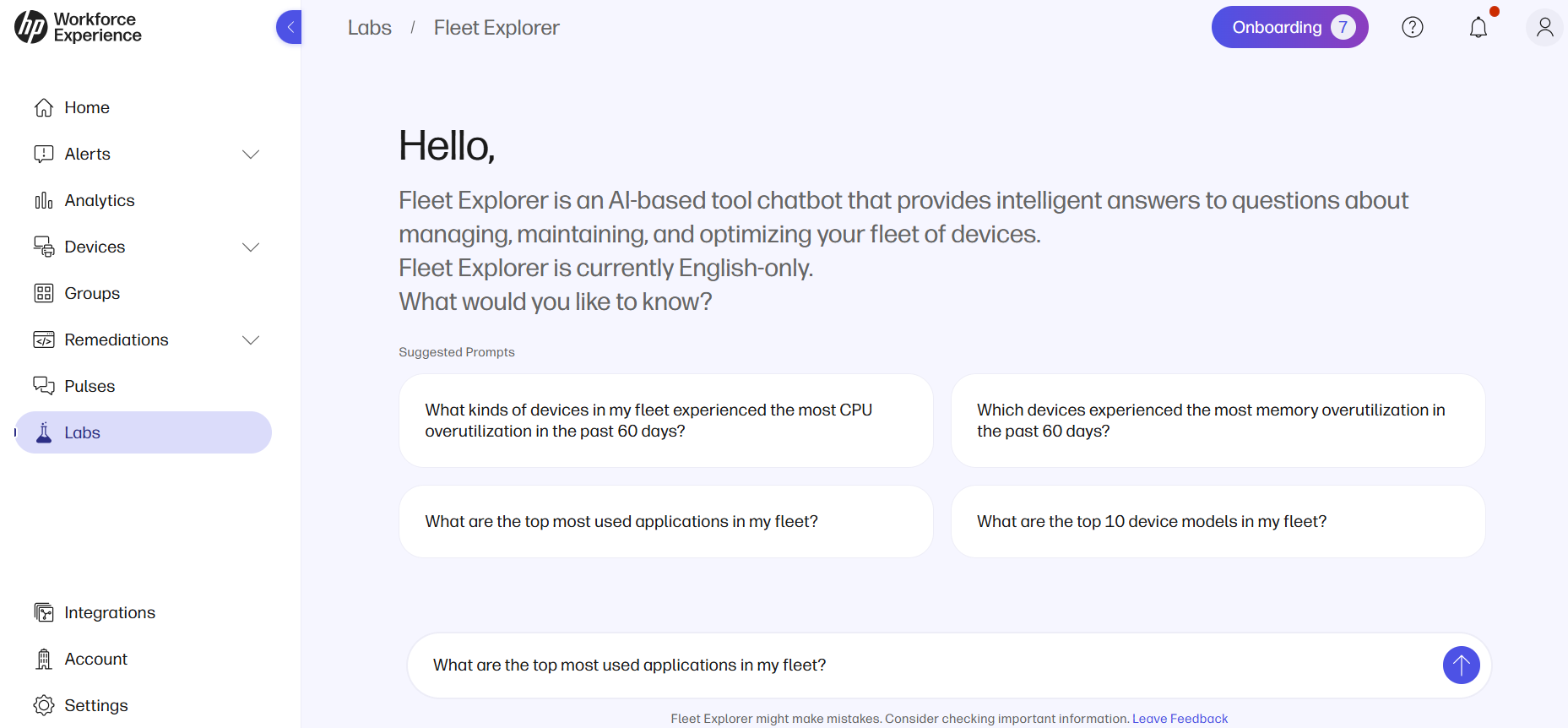
The HP Workforce Experience Platform (WXP) includes Fleet Explorer, an AI-powered IT chatbot for gaining insights on device performance, usage trends, and issues that affect DEX scores.
Support end users with more than basic system training
Despite strong IT investments, many employees feel discouraged from seeking help from IT. Forrester research shows that 58% of employees would rather live with unresolved technical issues than contact the service desk. Therefore, in addition to adopting proactive IT, organizations should improve training that shows employees how to use technology that’s issued to them.
"End-user support has traditionally been focused on making people understand the functionality of the system. The focus has been on supporting the initial learning process and on manuals and documentation. This is of course important but in our investigation of the learning strategy used by the IT office in the Primary Health Care Service in Aarhus we found that learning the functionality of the system was only the first step in the learning process.”
Ann Bygholm
Professor @ Aalborg University and researcher in health informatics and IT system implementationSource: IOS Press
Bygholm’s research shows that empowering employees to use IT tools effectively requires a multi-stage process. Beyond functionality, staff need context-specific guidance, role-based learning, and continuous reinforcement. This is another area where end user desktop support can evolve.
In conclusion, modernizing end user support means rethinking how employees are guided, trained, and empowered with the technology they use. Digital experiences must reduce friction and build trust, artificial intelligence should take over repetitive tasks so IT teams can focus on strategy, and training should go beyond manuals and help employees apply technology in everyday work.