
2025 DEX Wrap: Ticket Addiction, Invisible IT, Horizontal AI

In 2025, and moving into 2026, the goal for IT is to be like Clark Kent—working invisibly to prevent disaster rather than Superman swooping in to fix the wreckage.
In 2025, the enterprise IT landscape reached a breaking point driven by what we identified early in the year as a “ticketing addiction” that traps IT teams in a reactive cycle. Despite budgets for IT services and software rising, much of that investment has been poured into managing tickets rather than preventing them.
To break this cycle, the industry began shifting closer toward the concept of “Invisible IT,” a proactive approach to IT where problems are resolved before disrupting the digital employee experience (DEX). By leveraging device telemetry and analytics with DEX platforms, more IT leaders are moving upstream to detect anomalies in real time and reduce ticket volume.
Underpinning this transformation was the application of AI. While 2025 saw its fair share of AI slop and disillusionment, AI matured into a “horizontal enabling layer” that amplified the capabilities of IT teams. This was most notable in how AI was embedded into DEX platforms, including the HP Workforce Experience Platform (WXP).
In 2025, our team discussed these core themes while continuing to build out WXP, support the future of work, and give IT teams what they need to empower themselves and the employees they serve. Given the steep decline in work satisfaction, this is more important than ever and an opportunity that DEX is uniquely positioned to support.
Calling Out IT’s Ticketing Addiction
Tickets are still the lifeblood of enterprise IT. Instead of proactively resolving issues, employees are forced into submitting tickets to their helpdesk or service desk. This backward process leads to a poor digital employee experience and fuels the flames of reactive IT.
“One of the main culprits is IT service management,” said Faisal Masud, President of Worldwide Digital and Lifecycle Services at HP, in the 2025 blog post titled Enterprise IT’s Ticketing Addiction: Trapped in a Reactive Cycle. “The more problems teams face, the more money gets poured into ITSM tools and services. Vendors thrive when IT departments manage and close a never-ending stream of tickets, not when problems are actually solved.”
To make matters worse, 8 out of 10 IT organizations overpay for ITSM by nearly 50%, according to a Gartner stat cited in Masud’s post. Meanwhile, only 30% of digital workforce leaders had a DEX strategy or platform in 2024.
We learned this about DEX after attending the 2025 Gartner Digital Workplace Summit in London. We also learned that, through 2028, more than half of digital workplace leaders who don’t focus on DEX and enablement will risk being commoditized or replaced.
To help more IT teams avoid this, we rolled out WXP globally in April 2025. This launch marked a pivotal shift for HP, moving from a device-centric support model to an employee-centric DEX approach. By connecting directly to firmware and device analytics, the platform is designed to work behind the scenes, capturing signals from the source to eliminate disruptions before they register as tickets.
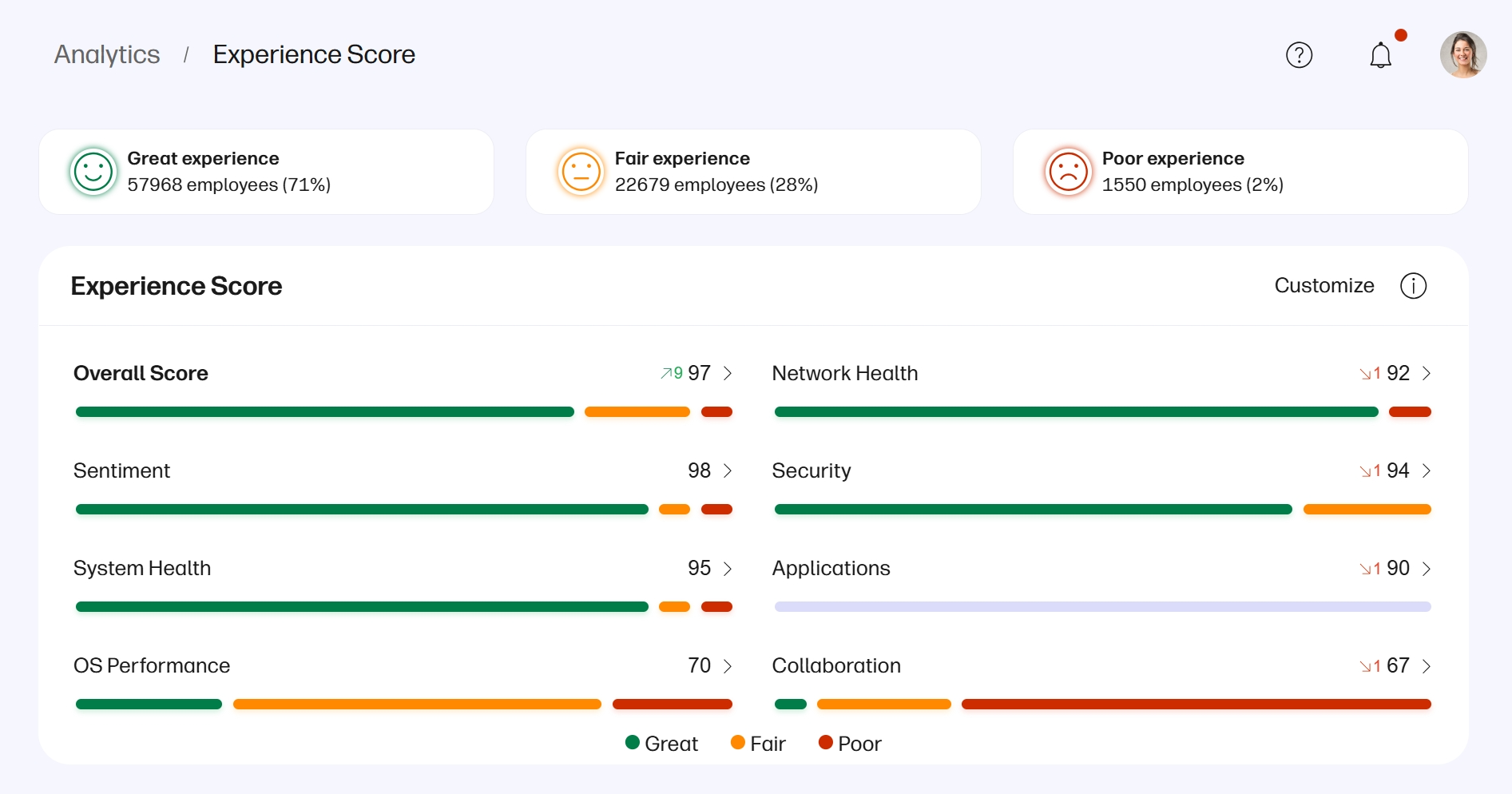
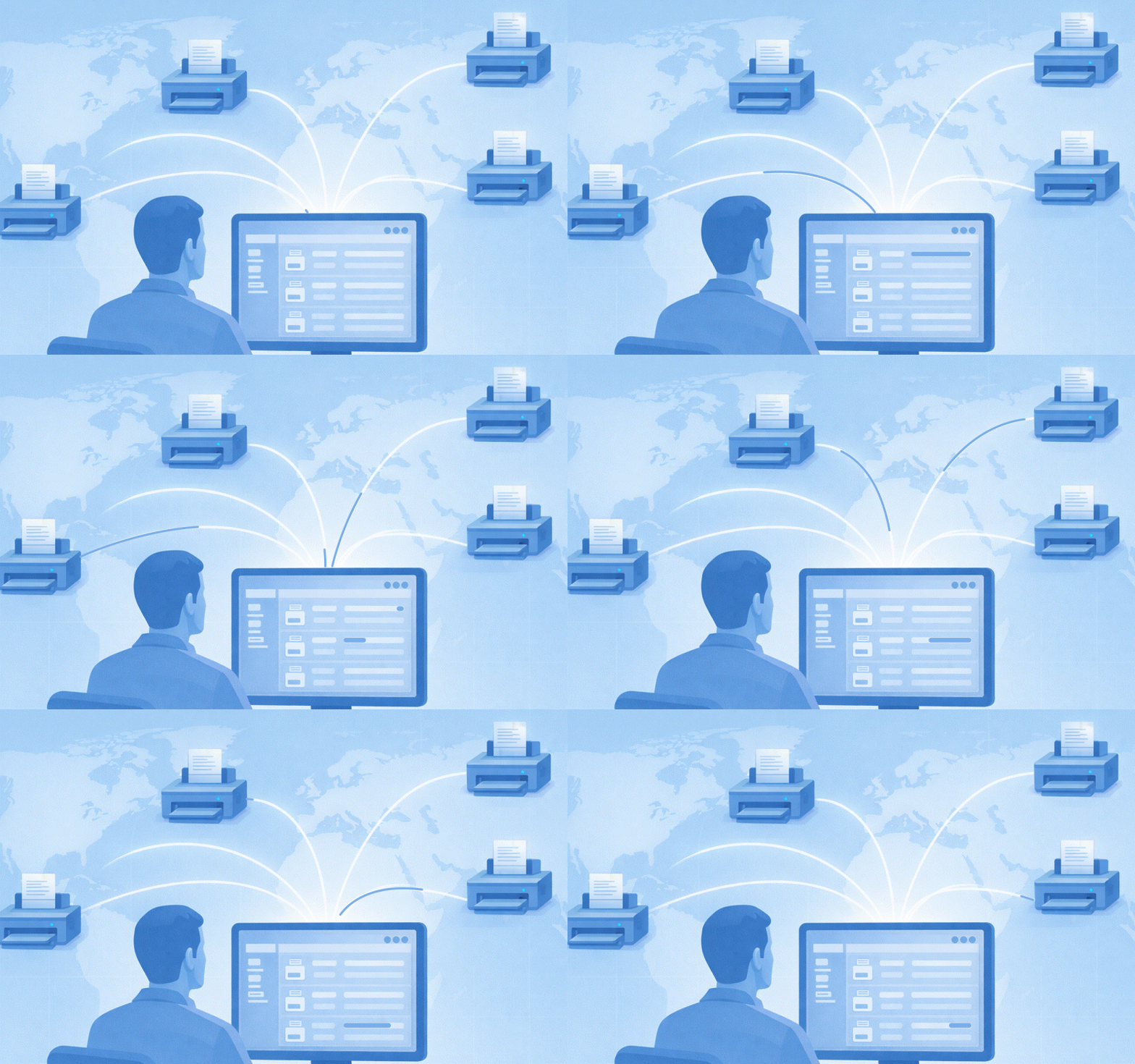
WXP was rolled out globally in 2025, providing IT teams with a bird’s eye view of their organization’s DEX score. Teams can drill down to see more detailed analytics related to network health, employee sentiment, security, and more.
Presenting a Solution: Invisible IT
DEX platforms, not more IT service management platforms, are essential to making IT an enabler of workplace productivity. When IT prioritizes preventing issues over merely closing tickets, the IT function becomes “invisible” to employees and allows them to maintain flow and focus.
“Although ITSM is the framework most organizations use to manage IT services, it was never designed to optimize the digital employee experience,” said Larry Meadows, Head of Product Strategy & Evangelism for WXP, in the 2025 blog post titled Invisible IT: Recovering From IT’s Ticket Addiction.
The notion of invisible IT resonated across the industry in 2025. Over the summer alone, organizations added 1.1 million devices to WXP to reduce their reliance on reactive helpdesk support. Leading by example, HP was one of these organizations.
Here at HP, IT oversees more than 80,000 PCs, 1,700 video rooms, and 1,000 printers worldwide for our organization. Using WXP internally, we’ve reduced support desk load by about 23%, with 97% of issues now identified proactively before employees even notice them.- Larry Meadows, Head of Product Strategy & Evangelism for WXP
Using AI as a Horizontal Enabling Layer
Artificial intelligence played a greater role in DEX this year than in years prior. While the danger of “AI mediocrity” looms as companies bolt so-called intelligence onto products without a clear strategy for value, AI has proven to be a game-changer for IT efficiency.
“AI doesn’t solve problems on its own,” said Eric Radist, Vice President of Digital Services Business at HP, in the 2025 blog post titled The Dangers of AI Mediocrity and How Businesses Can Break Free. “It’s a horizontal enabling layer that amplifies human capability. The real value doesn’t come from the technology itself, but from how it’s applied.”
A prime example is Fleet Explorer, an AI chatbot for WXP that launched in April 2025. As Jennifer James, Product Manager at HP, explained, the tool allows IT admins to get instant answers about fleet performance, inventory, and device health without manually generating reports.
This utility was further amplified in July when we integrated WXP with Microsoft Security Copilot. This integration combines proactive fleet management with a generative AI assistant, allowing IT teams to respond to security incidents at machine speed.
By the end of the year, these AI-driven capabilities helped us scale our DEX platform to over 2.7 million devices across 800+ IT organizations.
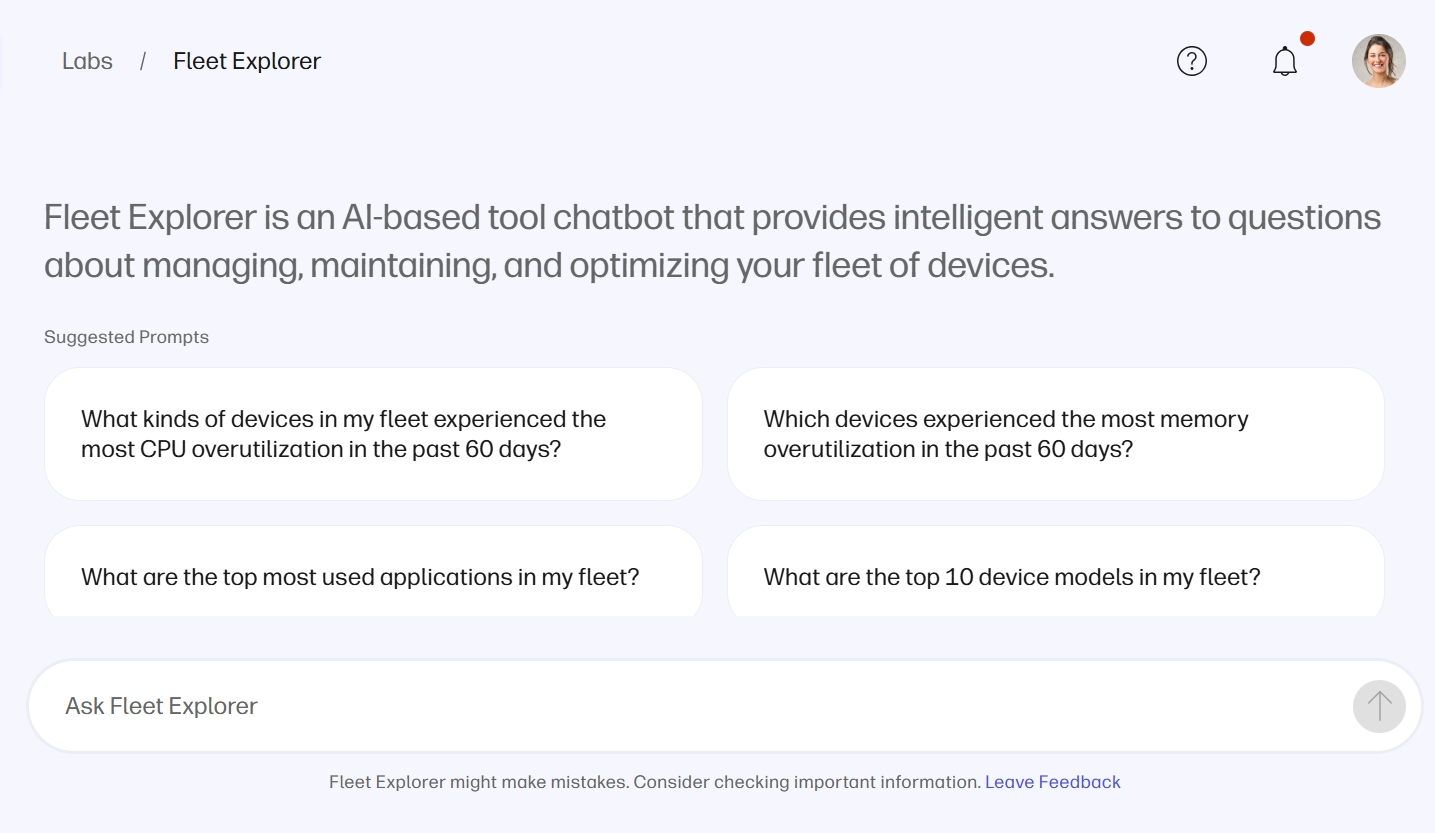
In 2025, the WXP team launched Fleet Explorer, an AI chatbot for modernizing IT with database querying through natural language. IT teams are using this tool to quickly retrieve data analysis and insights for fleets they manage.
Looking Ahead at DEX in 2026
As we look toward 2026, the role of the IT professional is fundamentally changing. The reactive IT administrator is being replaced by the “experience architect”, a leader who rethinks metrics and tools to design work environments rather than just maintaining them.
This aligns with the shift from firefighting to fireproofing for endpoint management. By leveraging data to see the unseen and AI to act at scale, IT teams can finally break the cycle of ticketing addiction. As one analyst at the Gartner Digital Workplace Summit in London highlighted, the goal for IT is to be like Clark Kent, working invisibly to prevent disaster rather than Superman swooping in to fix the wreckage.
From the blog
The latest industry news, interviews, technologies, and resources.





Frequently asked questions
Here's everything you need to know about WXP.
- What is the HP Workforce Experience Platform (WXP)?
- How does WXP work?
- Can WXP be customized to fit specific business needs?
- How is WXP modular?
- Is WXP compatible with different vendors and operating systems?
- How does WXP integrate with other IT tools to provide a more comprehensive solution?
- What is a Workforce Experience score?
- How is AI used within WXP?
- How can I buy WXP and find out about new releases?