
The Core Technologies Driving the Future of Digital Collaboration Experience

Collaborative work can lead to extraordinary achievements. At HP | Vyopta, we’re supercharging team performance with technology at the convergence of AI, unified communications, and digital employee experience (DEX) management.
This article was first published on LinkedIn.
In 1969, thousands of scientists, engineers, and astronauts from NASA, the U.S. government, and academia collaborated to make the historic Apollo 11 Mission a success.
In 2020, global teams of researchers, pharmaceutical companies, and governments worked together to rapidly develop COVID-19 vaccines, compressing years of research, testing, and distribution into just one year.
Throughout history, there have been many remarkable examples of collaboration achieving greater success than individual efforts by combining strengths, diverse perspectives, and shared goals. But in the modern work environment, how can business leaders foster collaboration and teamwork when teams are globally dispersed and can work from practically anywhere?
Collaboration today
Since HP acquired Vyopta, I have gained a greater appreciation for how artificial intelligence (AI), unified communications (UC), and digital employee experience (DEX) management combine to enable effective and efficient work across a large organization. These core drivers help employees do more in less time and are responsible for delivering an exceptional digital collaboration experience.
With teamwork, the convergence of AI, UC, and DEX management creates an impact far greater than the sum of its parts. Together, they enhance workflows and transform how entire teams operate, ensuring seamless communication, smarter decision-making, and a more productive work environment.
Leveraging AI: A Force Multiplier to Enhance Team Productivity and Outcomes
Like many, I use AI in various daily tasks related to collaboration and teamwork. AI helps me analyze, summarize, or prepare content from recorded calls and meetings in one-on-one or group sessions. I also use it to analyze meeting data to provide insights into participation, identify key topics, and generate action items.
AI improves UC technology too. It enhances video quality with optimal camera resolutions and refresh rates, improves audio through filtering and mixing, and ensures seamless media stream routing for calls and meetings. AI also automates routine tasks like scheduling meetings and transcribing discussions in real time. These examples help enhance the user experience and reduce the time spent on administrative tasks while improving outcomes.
AI also increases productivity. Harvard Business School professor Frances Frei’s research shows that employees retain information better when they listen to content instead of simply attending meetings. AI-powered tools allow employees to review recorded or AI-generated content at 1.5x speed, helping them absorb more information while avoiding unnecessary meetings. This approach has led to better retention and given people back up to 33% of their valuable time to focus on higher-value work.
The Power of Integrating UC Technology into Business Workflows
I have also seen improvements in the UC technology user experience, which is continually becoming easier to use and integrate into business applications and workflows. UC brings together various communication tools to create a seamless experience.
For example, vendors like Microsoft and Zoom offer solutions combining AI, email, instant messaging, video conferencing, voice telephony, and file sharing into a cohesive platform. This integration enables faster and more productive communication and collaboration within and across teams, regardless of location.
Meanwhile, innovative features like document sharing and virtual whiteboards facilitate real-time collaborative teamwork, reducing the need for in-person meetings and accelerating project timelines. New UC capabilities help businesses adapt to changing demands, drive innovation, and achieve stronger outcomes.
How DEX Management Ties It All Together
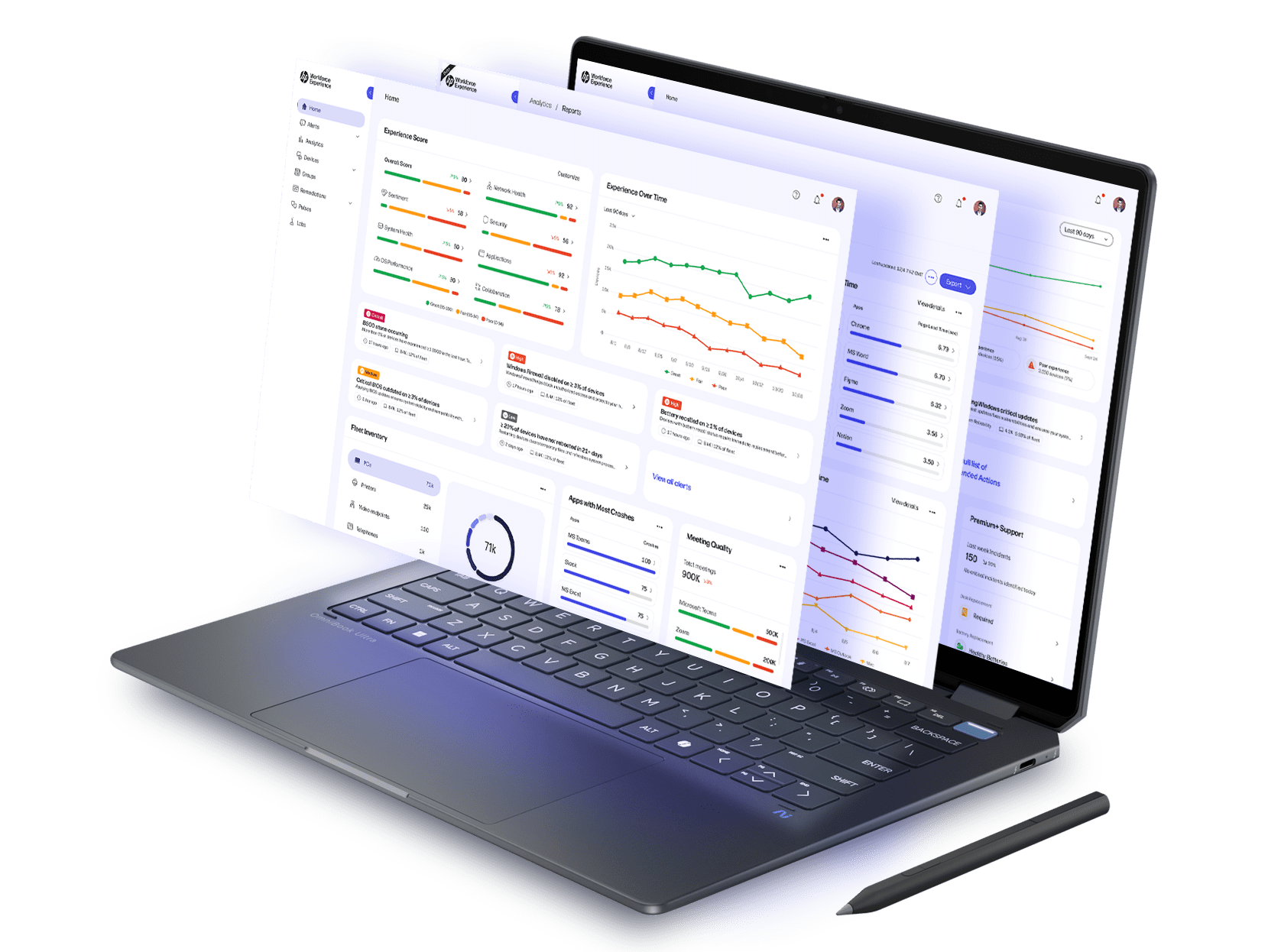
At most organizations, including HP, DEX management is now critical for delivering exceptional user experiences to accelerate business speed. To improve collaboration and teamwork, organizations must equip employees with the right tools to be productive and do their best work.
Giving your teams the best tools
Hybrid work only works effectively if employees can communicate, collaborate, and stay productive without technology issues getting in the way. This is especially true for UC technology, which supports internal virtual communication, distributed collaborative teamwork, telehealth, remote learning, virtual customer services and sales and much more.
Companies like HP, Logitech, and Cisco are not just selling conference systems and webcams; they’re selling optimized hybrid meeting experiences that help teams connect without frustration. In addition, HP, Apple, and Dell design personal devices to support seamless, secure work from anywhere, allowing employees to communicate and collaborate using a single device, such as a laptop, desktop computer, or smartphone.
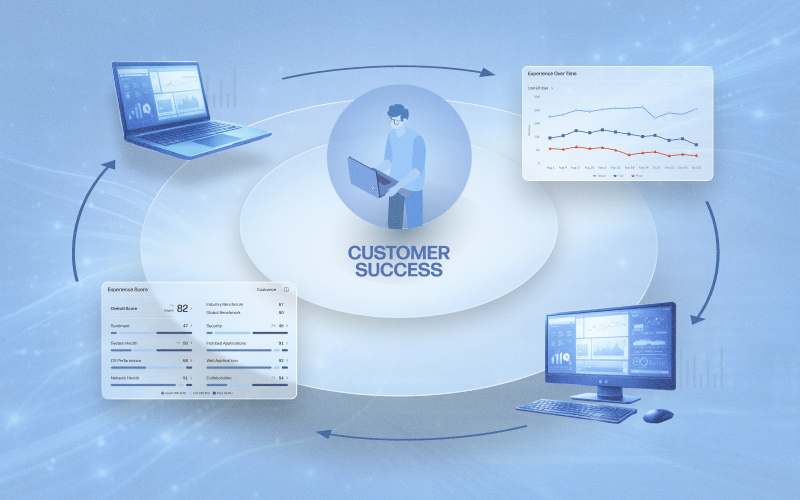
Technology from Vyopta and the HP Workforce Experience Platform (WXP) makes it easy for businesses to monitor and manage everything. Across device fleets, collaboration tools, virtual desktops, and employee engagement, they remove tech headaches before they slow down individuals and teams. In addition, HP’s Poly Lens is a device management solution that will further integrate with Vyopta and WXP to deliver deeper monitoring and management of Poly headsets, speakerphones, desk phones, and video conferencing systems. With these tools, user experience management has become a major competitive differentiator for modern businesses.
Improving productivity
Employees with minimal digital friction simply get more done. Yet today, some of the most common team productivity killers include:
- Fuzzy or frozen video
- No audio or choppy audio
- Camera not working
- PC/laptop content not seen on the room display(s)
- And more
Improving collaboration outcomes starts with data, and modern systems and collaboration applications offer more discrete data than ever. For example, Microsoft 365 and Google Workspace provide a work hub that supports individual and collaborative teamwork while making available important metadata. Meanwhile, Zoom, Microsoft, Google, Cisco, HP, and Logitech create intelligent workspaces that anticipate employee needs and make available important telemetry from personal systems and UC group meeting systems, infrastructure, and applications.
But having data isn’t enough—what you do with that data is what truly matters. Businesses that leverage key insights derived from the rich dataset made available from new technology can effectively prevent issues or resolve them faster than ever, keeping hybrid and remote teams productive. Vyopta and WXP turn raw data into meaningful actions, improving visibility across endpoints (both personal and group systems) while strengthening management, security, automation, and intelligence. The result is a seamless digital experience that drives both employee satisfaction and business performance.
The Future of Digital Collaboration Experience Management
Businesses must continue to make strategic investments in AI, UC, and DEX management to continually improve their business speed and quickly adapt to changing business demands, customer needs, and market and competitive forces. With Vyopta, WXP, and Poly Lens, HP will be there every step of the way, providing contextual intelligence, unified visibility, automation, and actionable alerts for multi-vendor business collaboration applications, devices, and infrastructure.
Digital collaboration experience management is not a trend but a requirement for businesses to thrive in the modern digital age. Businesses that prioritize and invest in these core elements will attract and retain top talent, boost individual and collaborative teamwork results, drive innovation and agility, and accelerate business speed.
HP Workforce Experience Platform¹ is a comprehensive digital employee experience solution that enables organizations to optimize IT for every employee’s needs.
¹The HP Workforce Experience Platform Device Management application currently requires new or existing HP Proactive Insights Service. Offer available through April 30, 2025, for the remainder of the HP Proactive Insights license term. Access will be granted to migrate to the HP Workforce Experience Platform upon availability in the country where HP Proactive Insights was sold.
From the blog
The latest industry news, interviews, technologies, and resources.




Frequently asked questions
Here's everything you need to know about WXP.
- What is the HP Workforce Experience Platform (WXP)?
- How does WXP work?
- Can WXP be customized to fit specific business needs?
- How is WXP modular?
- Is WXP compatible with different vendors and operating systems?
- How does WXP integrate with other IT tools to provide a more comprehensive solution?
- What is a Workforce Experience score?
- How is AI used within WXP?
- How can I buy WXP and find out about new releases?