
Cyber attackers continue to exploit unpatched vulnerabilities as one of the fastest, most reliable paths into enterprise networks. For IT leaders, patch management is both a frontline defense against these risks and a safeguard for system performance and the digital employee experience (DEX). But with thousands of devices, constant OS and application updates, and an increasingly hybrid workforce, patch cycles can quickly overwhelm teams without the right software and policies in place.
Expert tips for using patch management software
Broad device coverage, smarter integrations, and better automation are three areas where you can focus to uplevel your patch management strategy. The following expert insights highlight how to evaluate solutions that secure overlooked endpoints like printers, connect patch management software with AI and DEX platforms for deeper visibility, and use automation to shorten remediation timelines.
Use a patch management solution that supports printers
Printer security remains a neglected area of IT defense. According to a study by HP Wolf Security, IT teams spend 3.5 hours per printer per month managing hardware and firmware security issues, but just 36 percent of organizations apply firmware updates to printers promptly. This gap increases risks that attackers exploit to infiltrate networks.
"Outdated printer firmware poses a significant security risk for organizations, potentially exposing them to cyber attacks. To mitigate this often overlooked threat, organizations can regularly update printer firmware to the latest versions provided by manufacturers, implement a robust patch management system to ensure timely updates across all devices, and conduct regular security assessments to identify vulnerabilities and address them promptly."
Phillip John Perez, US Print Channel Sales @ HP
Source: LinkedIn
Action step: Compare patch management solutions that support printers and check for integration opportunities with IT software you’re already using. Ensure that the selected patch management tools provide centralized dashboards for monitoring firmware status, reporting compliance, and pushing updates across multi-vendor environments.
Integrate patch management software with DEX and AI
Integration with AI-powered systems enhances visibility and decision-making. For example, connecting HP Workforce Experience Platform (WXP) with the AI tool Microsoft Security Copilot provides IT teams with a broader view of device information, accessible through natural language queries. This highlights the power of pairing patch management software with DEX software.
"The integration of WXP with Microsoft Security Copilot offers IT teams a unified interface enriched with deeper device insights. This enables faster, more comprehensive responses to security risks—helping to mitigate or even prevent incidents that could disrupt employee productivity and satisfaction."
Dorothy Li, Corporate Vice President of Microsoft Security Copilot and Ecosystem
Source: WXP Blog
Action step: Integrate patch management software with DEX platforms and AI security assistants. Configure APIs to share vulnerability, performance, and compliance data between systems.
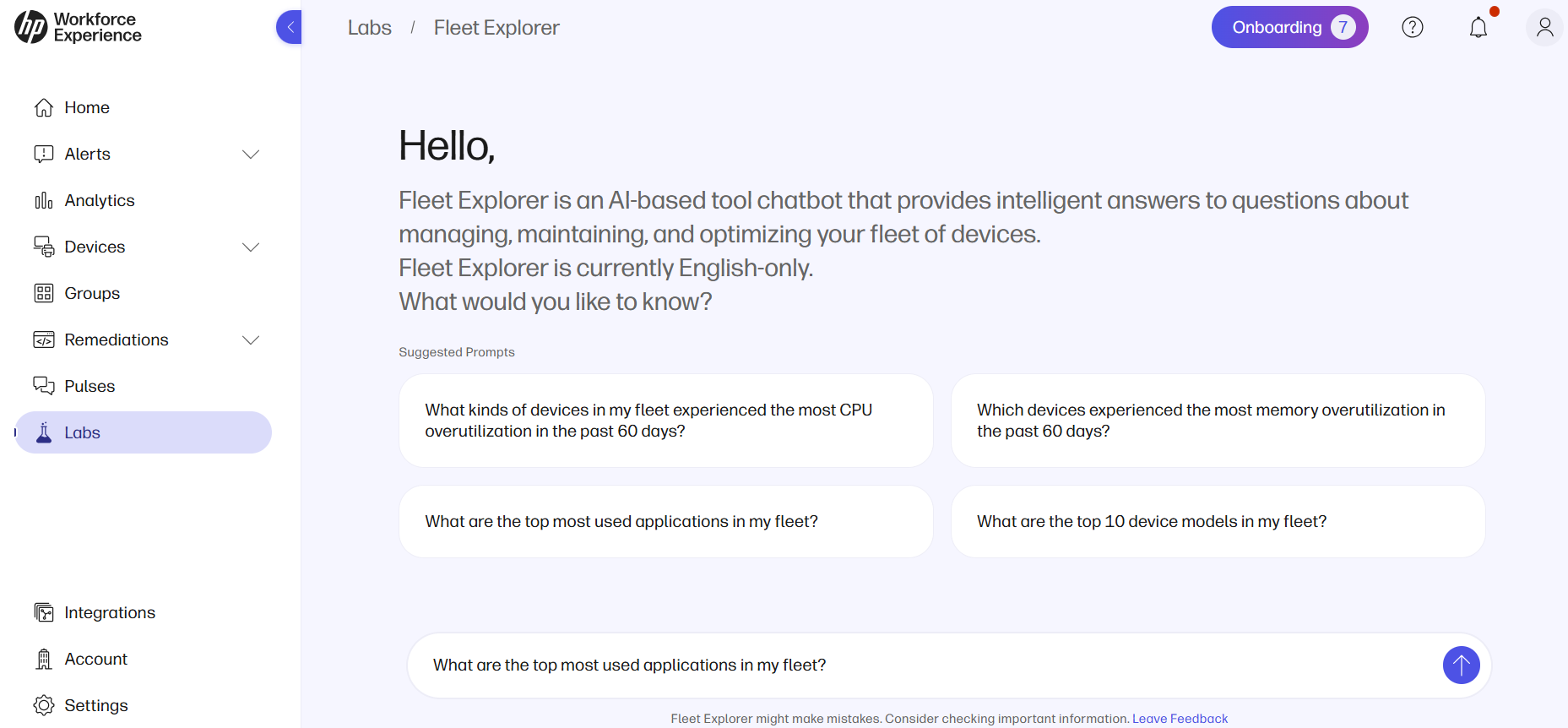
Fleet Explorer is another AI tool available that provides insights on device performance, security posture, and issues related to patch management.
Use monitoring and automation to patch affected devices
Ad-hoc processes remain a weak point in enterprise security. A survey of 663 IT and security practitioners found that only 31% of patches are distributed using automation. Manual processes leave too many gaps and slow remediation timelines.
"Automated patch management systems integrate with vulnerability scanning tools and security databases to continuously monitor systems for known vulnerabilities. Once a vulnerability is detected, the system automatically identifies affected devices and prepares them for patching, eliminating delays caused by manual identification and prioritisation."
Isla Sibanda, Ethical Hacker and Cyber Security Specialist
Source: Computer Weekly
Action step: Deploy automated patch management solutions that link to real-time vulnerability feeds such as CVE databases. Configure automation policies to classify and prioritize patches based on severity, then schedule staged rollouts to test environments before enterprise-wide deployment.
Expert tips for better patch management policies
Automation and AI cannot solve every challenge related to patching. Policies created and updated by IT teams are necessary for improving patch management strategies. By addressing unmanaged devices, focusing on code-level fixes, and unifying endpoints for hybrid environments, organizations can strengthen policies. IT experts share insights on these best practices below.
Create a policy for handling vulnerabilities on unmanaged devices
Neglecting unmanaged devices significantly raises risks. According to the Ponemon Institute, 60% of breaches occur due to a known vulnerability where the patch was not applied. These unmanaged endpoints create blind spots that attackers exploit.
"Patch management was difficult enough in the days of corporate networks and fully managed fleets. Today's modern, distributed workforce has to contend with app and device sprawl, and many of these Shadow IT applications and employee personal devices are fully unmanaged by IT. Every unmanaged device could be hosting unpatched, vulnerable software; the LastPass Hack is an infamous example of this, since it started from an unpatched app on an employee's personal computer."
Jason Meller, Vice President of Product @ 1Password
Source: The Hacker News
Action step: Establish a patch management policy that addresses unmanaged devices. Require endpoint detection and response (EDR) tools, enforce network access controls for non-compliant devices, and deploy mobile device management (MDM) platforms to bring personal devices under partial governance.
Go beyond patch management with remediation at the code level
Some vulnerabilities cannot be solved with patches alone. For example, insecure serialization is a top web application security risk, often requiring changes in development practices rather than traditional patching.
"The remediation path requires strategic thinking beyond patch management. Organizations must evaluate migration strategies toward memory-safe languages like Go and Rust, which eliminate entire classes of deserialization attacks through design rather than defensive coding. Modern development frameworks incorporate serialization safety by default, making legacy platform modernization a security imperative rather than a technical preference."
Levi Gundert, Chief Security & Intelligence Officer @ Recorded Future
Source: Recorded Future Blog
Action step: Augment patch management best practices with secure coding practices for applications developed by your organization. Use static application security testing (SAST) tools to identify serialization flaws early in development and adopt frameworks that enforce input validation and memory safety.
Unify endpoints to streamline patch management for hybrid work
Hybrid work amplifies IT complexity. According to Forrester, the shift to hybrid work magnified IT operational challenges for 75% of organizations. Decentralized endpoints increase patching delays and expose security gaps.
"Patching is one area where IT teams procrastinate. Nearly three-quarters (71%) of IT and security teams say it is overly complex, cumbersome and time-consuming, and 57% of those same professionals say remote work and decentralized workspaces make patch management even more challenging. A breach, intrusion or external event triggers patch management activity in the typical enterprise 61% of the time. IT and security teams are caught off-guard, go into react mode and immediately prioritize patch management to limit the breach."
Louis Columbus, Endpoint Security and AI Contributor @ VentureBeat
Source: VentureBeat
Action step: Consolidate patch management across PCs, mobile devices, and other endpoints through unified endpoint management (UEM). Configure centralized dashboards to track compliance, enforce patch baselines, and automate updates across hybrid environments.
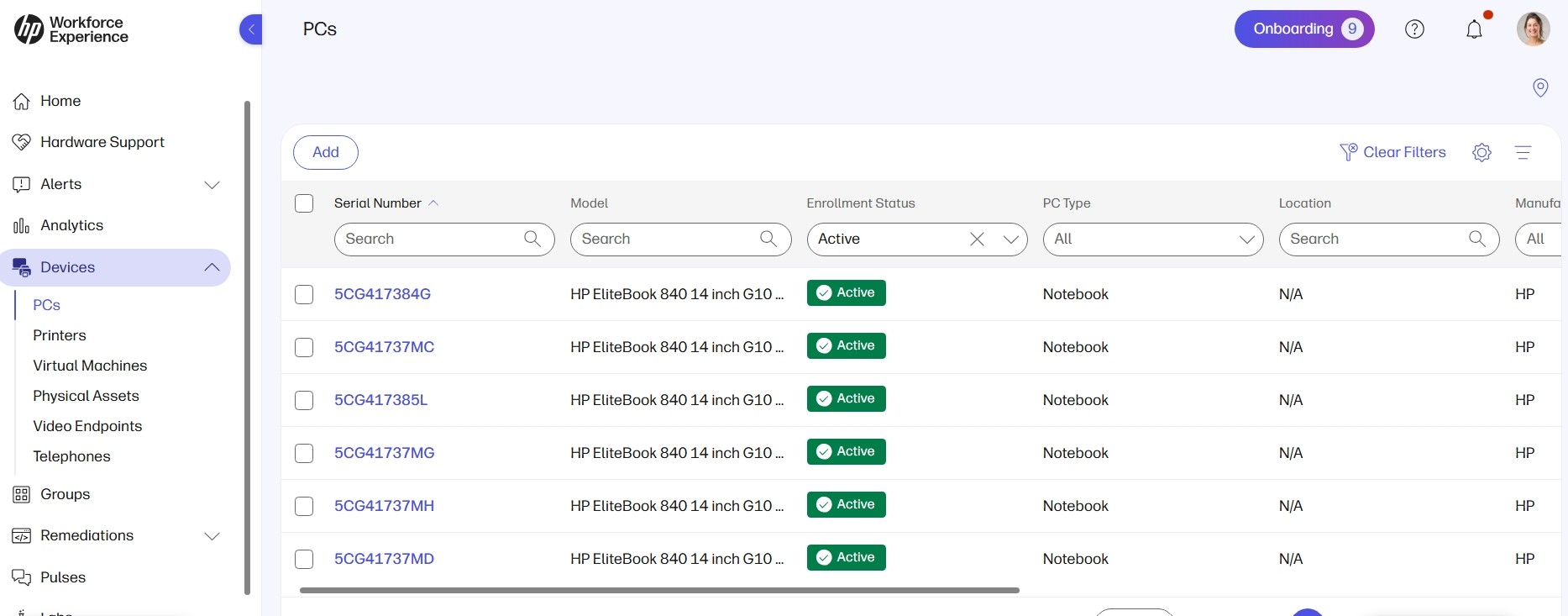
The HP Workforce Experience Platform (WXP) gives IT teams tools to monitor every endpoint in their device fleet. As of 9/17/25 remediation and patching options are available for Microsoft-supported Windows OS.
Key Takeaways for Patch Management Success
- Printers and other overlooked devices must be included in patch management solutions to close critical security gaps.
- Integrating patch management software with AI and digital employee experience tools enhances visibility and predictive remediation.
- Automated patch management reduces manual workloads and accelerates the distribution of security updates.
- A strong patch management policy must address unmanaged devices and shadow IT to prevent breach risks.
- Unified endpoint management streamlines patching across hybrid work environments, improving consistency and compliance.