The New Rules of Talent Acquisition and Retention
Retaining talent depends on relentlessly improving the overall experience and giving people the tools to do their best work.
This article was first published on LinkedIn.
After winning the NCAA title, Michigan head coach Dusty May had no time to celebrate the program’s first national basketball championship in 37 years. Soon after the nets were cut down, the “transfer portal”—aka college free agency—had opened, and the focus shifted immediately to recruiting and retaining players for the next season. In the modern NIL (Name, Image, and Likeness) era, athletes can simply switch organizations for a better offer or opportunity.
The same dynamic now defines the modern workplace. Even amid AI displacement and geopolitical factors that are adding to a highly volatile labor market, the “transfer portal” remains open for top employees, forcing organizations to rethink how they attract and retain the best talent. The stakes are high: Gallup reports that replacing a single employee can cost between one-half and twice their annual salary.
Beyond compensation and benefits, companies now must continuously provide the right tools, support, and environment for employees to succeed. By improving the digital employee experience (DEX), leaders can create the conditions that encourage workers to stay.
The Rules Have Changed
In any sport, losing a few key players can devastate a team. The same is true in the corporate world. The impact of voluntary turnover costs U.S. businesses $1 trillion per year. It also results in:
- Higher costs: Recruiting, onboarding, training, and replacement expenses
- Lost knowledge: Institutional expertise leaves with the employee
- Slower execution: Projects stall or lose momentum
- Lower productivity: Remaining employees absorb more work
- Weaker relationships: Customer and team continuity suffer
- Greater business risk: A poor exit could threaten the brand and lead to litigation
Employee churn can also trigger a domino effect of departures. In a world where 50% of employees are open to switching jobs, keeping the workforce happy and productive might be the most important investment organizations can make.
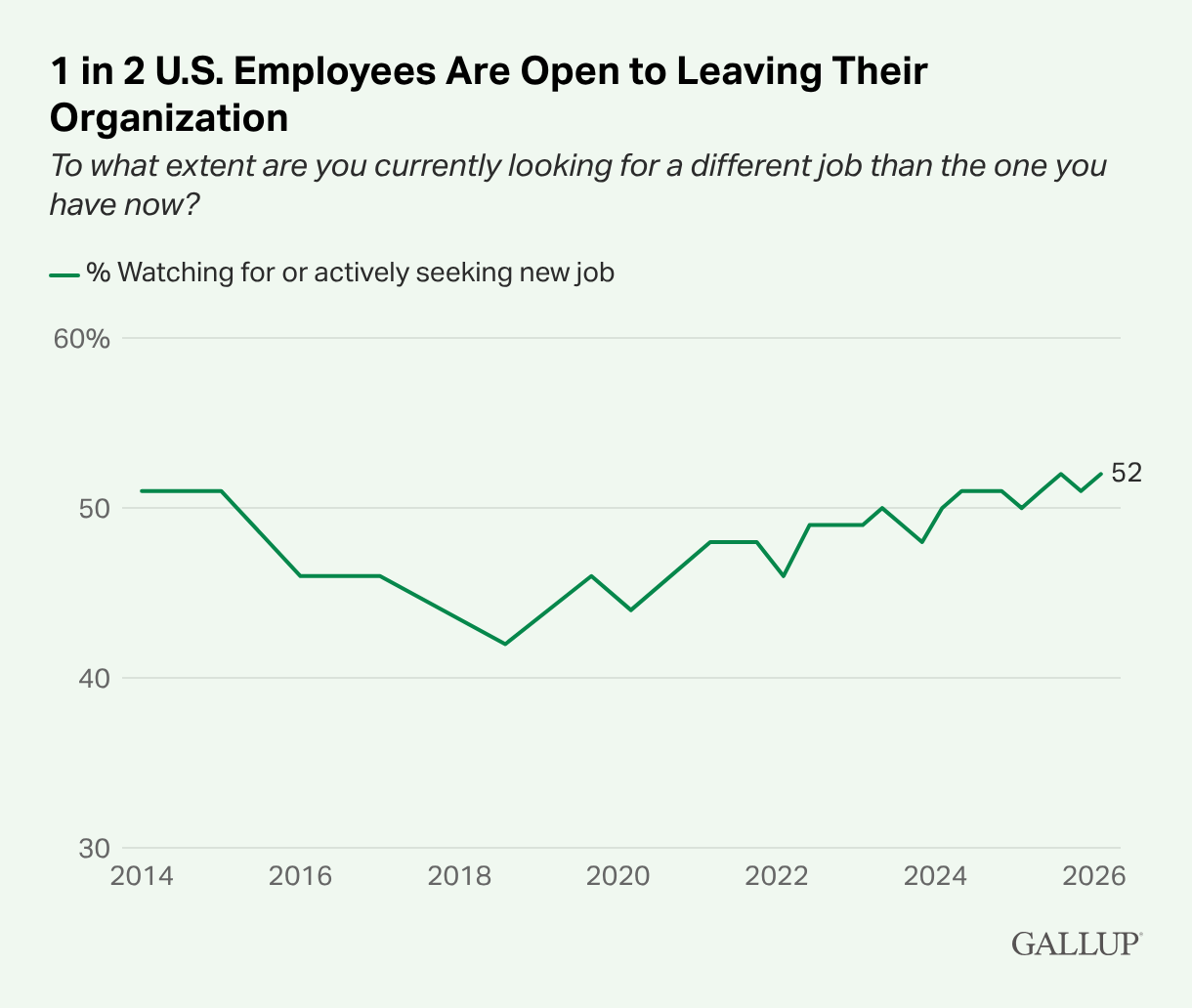
Source: Gallup
Digital friction drives exits
A poor digital experience is a major driver of frustration and workplace attrition. Research from Workfront found that nearly half (49%) of US workers will quit their job if their workplace technology isn’t up to scratch. Meanwhile, nearly a third of workers (32%) say they’ve previously left jobs because technology prevented them from doing their work.
The good news is that organizations can take a proactive role in removing friction. Whether dealing with performance bottlenecks, connectivity gaps, fragmented workflows, software bugs, or outdated hardware, companies can leverage DEX management tools to identify and resolve these issues before they impact productivity and drive talent to the exits.
Powering Retention Through a Frictionless Workplace
A great DEX creates conditions for team continuity, which in turn fuels better business outcomes.
An MIT study found that companies with strong employee experience innovate twice as fast, achieve significantly higher customer satisfaction, and generate 25% greater profitability than companies with poor employee experience. The research also found that organizations improve day-to-day work by reducing complexity, providing the right digital tools, connecting people with ideas, and removing friction from non-value-creating tasks. Below are a few DEX capabilities that can improve retention.
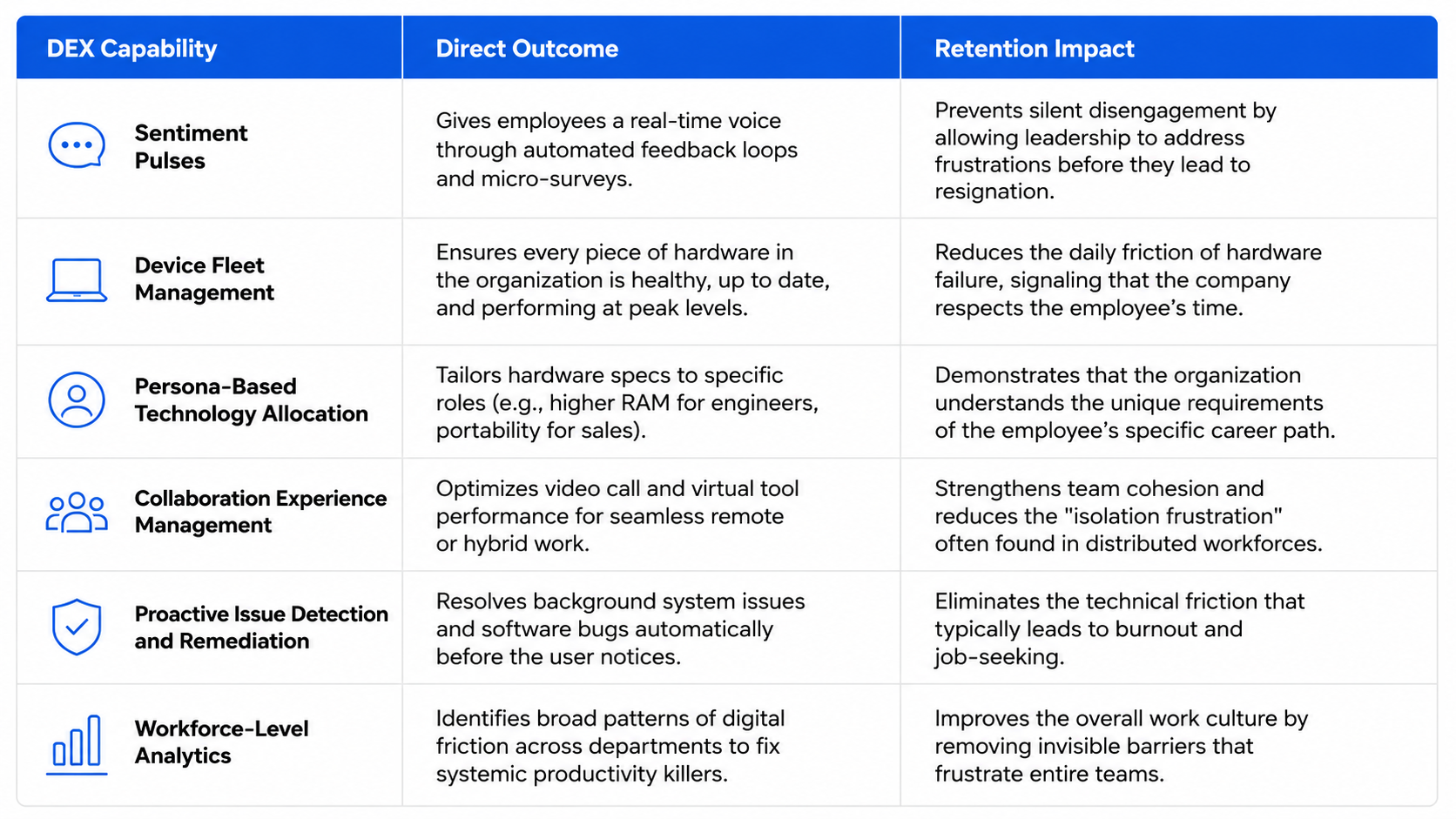
The ultimate goal is to create an environment where the best talent never wants to leave. When technology is invisible and seamless, it removes distractions and enables employees to focus on performing at the highest level.
A Perpetual Game of Talent Acquisition and Retention
In the corporate world, competition never rests, and expectations constantly evolve. The best work environments are the ones that continually create the conditions for talent to thrive.
As such, the job of building a world-class team never ends. Retaining the right talent and providing an environment where people always feel valued and appreciated is a continuous effort that requires discipline and a competitive mindset.
As Dusty May noted ahead of Michigan’s Final Four game:
You have to retain the right guys, and I think that's a big part of our success.
HP Workforce Experience Platform is a comprehensive digital employee experience solution that enables organizations to optimize IT for every employee’s needs.
Discover how it can transform your IT operations from a cost center to a business accelerator. Simply fill out the form below, and our team will be in touch soon.
From the blog
The latest industry news, interviews, technologies, and resources.





Frequently asked questions
Here's everything you need to know about WXP.
- What is the HP Workforce Experience Platform (WXP)?
- How does WXP work?
- Can WXP be customized to fit specific business needs?
- How is WXP modular?
- Is WXP compatible with different vendors and operating systems?
- How does WXP integrate with other IT tools to provide a more comprehensive solution?
- What is a Workforce Experience score?
- How is AI used within WXP?
- How can I buy WXP and find out about new releases?