5 Big Retail Tech Trends Reshaping the Store in 2027
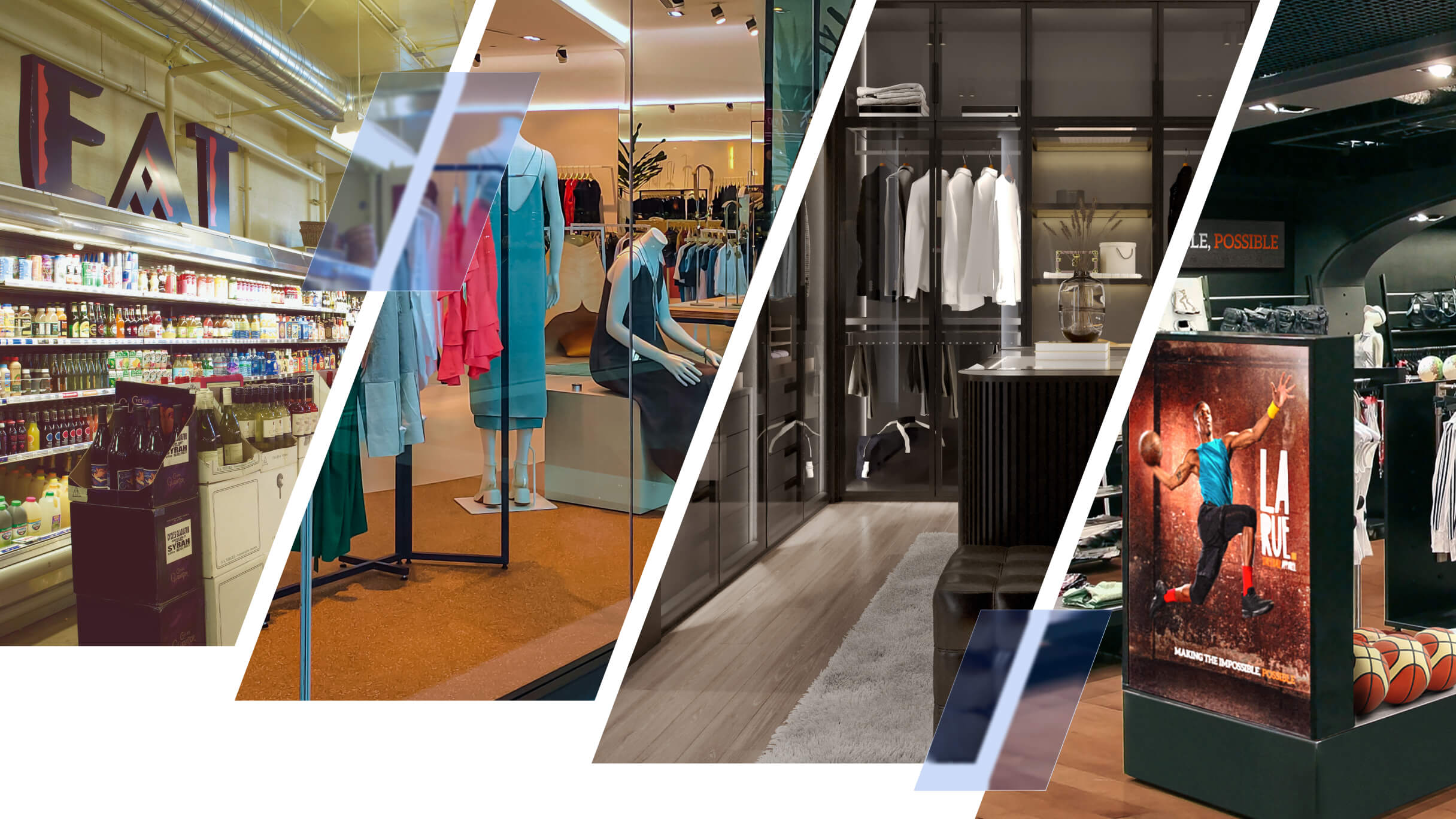
As retailers race to modernize brick-and-mortar retail, tackling real business problems now matters more than ever.
To say that brick-and-mortar retail is undergoing rapid and disruptive change feels like an understatement. Margins are under pressure from tariffs, supply chain disruptions, higher borrowing costs, and record energy prices, while customers expect more value, speed, and convenience.
Yet retail technologies are advancing in leaps and bounds, creating new opportunities across the store. According to Gartner, global enterprise IT spending in retail is forecast to grow 7.4% in 2026 to $232.8 billion.
As the holiday season approaches and we look ahead to 2027, these technologies will play a pivotal role in modernizing stores and addressing the problems that matter most to customers.
Here are five retail tech trends likely to influence the industry in the year ahead.
#1: AI Orchestrates the Store
Microsoft’s Satya Nadella recently referenced Jevons paradox to explain why, as AI becomes more efficient and accessible, businesses will use more of it, not less. However, even as AI usage grows, many retailers still rely on a patchwork of disconnected tools.
When systems and data don’t connect, using more AI adds complexity instead of simplifying operations. For example, AI could be used to predict when a store is about to run out of stock and automatically trigger replenishment. But if inventory, POS, and supply chain systems aren’t connected, retailers risk empty shelves and lost sales.
In 2027, businesses will invest in unified store orchestration to connect and power their operations. From front-end systems to back-end infrastructure, they’ll use AI to coordinate and optimize:
- Inventory management
- Order management and fulfillment
- Supply chains
- Checkout and transaction processes
- Staffing
- Pricing and promotions
- Product assortment and demand planning
Broader AI adoption will also require intelligence at the edge, supported by the software and services needed to orchestrate and manage it. Whether it’s smart POS and peripherals, self-checkout kiosks, or workstations and thin clients, local intelligence powered by CPUs, GPUs, and NPUs will bring AI and automation closer to frontline operations.
#2 Computer Vision Goes Beyond Loss Prevention
If there’s one edge AI use case with the potential to reduce shrink and deliver immediate value, it’s computer vision (CV). IDC finds that 63% of retailers are making fraud and loss at checkout a top investment area. They also predict that by 2028, 50% of large retailers will expand the use of CV for store monitoring, reducing shrinkage by 40%.
Yet loss prevention only scratches the surface of what’s possible.
For example, Shopic uses CV and AI to identify items placed in a shopping cart and provides real-time visibility into shopper paths, planogram compliance, store heat maps, and live inventory. Amazon’s Just Walk Out technology combines AI, CV, sensor fusion, and RFID to track what shoppers grab off shelves and automatically charges them when they leave the store.
However, a recent survey by Press Ganey Forsta found that just 1 in 5 consumers trust retailers to use their data responsibly. As CV use grows, how businesses protect customer privacy can be a key differentiator. Data governance, transparency, and human oversight will be essential to maintaining customer trust.
#3 Stores Beef Up Cybersecurity
Supermarkets in France were recently hit with a cyberattack that compromised refrigeration systems across hundreds of stores. Hackers remotely raised temperatures to as high as 50°C/122°F, spoiling food and, in some cases, causing fires.
The incident was just the latest in a string of brazen attacks that exposed security gaps in brick-and-mortar retail.
- Ahold Delhaize took systems offline after a cyberattack disrupted orders, deliveries, and distribution.
- Marks & Spencer suffered a 2025 cyberattack that took 15 weeks to fully restore click-and-collect services.
In 2027, retailers will need to rethink security in both IT and operational systems to keep stores up and running. Applying zero trust principles means verifying every access request, never automatically trusting users or devices, and limiting access to only what’s necessary. Having backups and contingency plans in place will also help businesses recover quickly when disruptions happen.
- NIST’s Cybersecurity Framework (CSF) 2.0 recommends organizations inventory, monitor, and govern all connected devices, software, IoT, and operational technology (OT).
- CISA recommends separating IT and OT networks.
- Microsoft’s recent case study highlights endpoint detection and response (EDR), fast patching, multi-factor authentication (MFA), least-privilege access, and continuous monitoring as key retail defenses.
- DEX platforms, such as the HP Workforce Experience Platform (WXP), support real-time IT estate monitoring, anomaly detection, alerts, and automated remediation.
#4 Retail Tech Stacks Embrace Best of Breed
Having complete freedom and flexibility to choose the right solutions is the ultimate luxury in brick-and-mortar retail. With store technology becoming widely accessible, retailers can finally take a best-of-breed approach by selecting the right solutions to fit their individual needs.
A scalable, composable tech stack makes it possible to modernize incrementally without the risks of replatforming. APIs help connect software from different providers, including endpoint management and commerce applications, while HP infrastructure can provide a foundation for store operations. When evaluating new solutions, key considerations include:
- Composable store architecture that connects apps from different vendors.
- Hardware compatibility with systems that work with existing POS terminals, scanners, and payment devices.
- Operational continuity to keep checkout and payments up and running through upgrades and outages.
- Data orchestration to coordinate customer, product, and order data across store systems.
It’s also important to establish clear ownership of integration, troubleshooting, support, and recovery with clear SLAs. Whether it’s internal IT, a partner, vendor, or systems integrator, one party should own end-to-end coordination and recovery.
#5 ROI Becomes a Must-Have
According to Bain, 59% of retailers plan to increase spending on store technology over the next three years. But they also expect results: 44% anticipate a bottom-line improvement of at least 1.5%, while nearly 70% expect their investments to pay for themselves within three years.
For AI, where worldwide spending is forecast to reach $3.6 trillion in 2027, the pressure to prove value is especially high. A recent Gartner survey found that only 13% of enterprise CIOs say their organizations have realized significant value from AI.
In 2027, there will be greater financial scrutiny over what retailers get for their technology spend. Whether it’s agentic AI, edge computing, unified commerce infrastructure, or digital shelf labels, scaling any advanced tech will require a strong business case based on:
- Measurable gains in sales, margins, and productivity.
- Proven results in select stores before larger rollouts.
- Total cost of ownership (TCO) across hardware, software, and support.
- Faster payback periods.
Instead of simply adding features and capabilities, retailers will focus on what matters most: improving store efficiency, lowering costs, and increasing profitability.
Looking Ahead
As 2027 approaches, retailers face no shortage of new tech that promises to transform the brick-and-mortar store. The bigger challenge is knowing which areas to invest in.
The retailers that get the most from their tech stacks will stay focused on the fundamentals: start with the customer, solve the business problem, prove the value, and scale what works.
Ultimately, the best technology isn’t necessarily the most advanced. What matters most is how well it improves store performance and the customer experience.
HP Workforce ExperienceTM Platform is a comprehensive digital employee experience solution that enables organizations to optimize IT for every employee’s needs.
Discover how it can transform your IT operations from a cost center to a business accelerator. Simply fill out the form below, and our team will be in touch soon.
From the blog
The latest industry news, interviews, technologies, and resources.



Frequently asked questions
Here's everything you need to know about WXP.
- What is the HP Workforce Experience Platform (WXP)?
- How does WXP work?
- How is WXP modular?
- Is WXP compatible with different vendors and operating systems?
- How does WXP integrate with other IT tools to provide a more comprehensive solution?
- What is a Workforce Experience score?
- How is AI used within WXP?
- How can I buy WXP and find out about new releases?