The Irresistible Economics of Physical Retail
Resilient foot traffic and greater access to technology enable retailers to generate more value per square foot.
The death of brick-and-mortar has been greatly exaggerated. From Axios and The New York Times to WSJ and consulting firms like BCG, much of the business establishment treated the pandemic-era collapse in foot traffic and surge in e-commerce as proof that physical stores were becoming extinct.
But while many pundits and observers predicted an “impending retail apocalypse,” anyone who truly understood retail knew better.
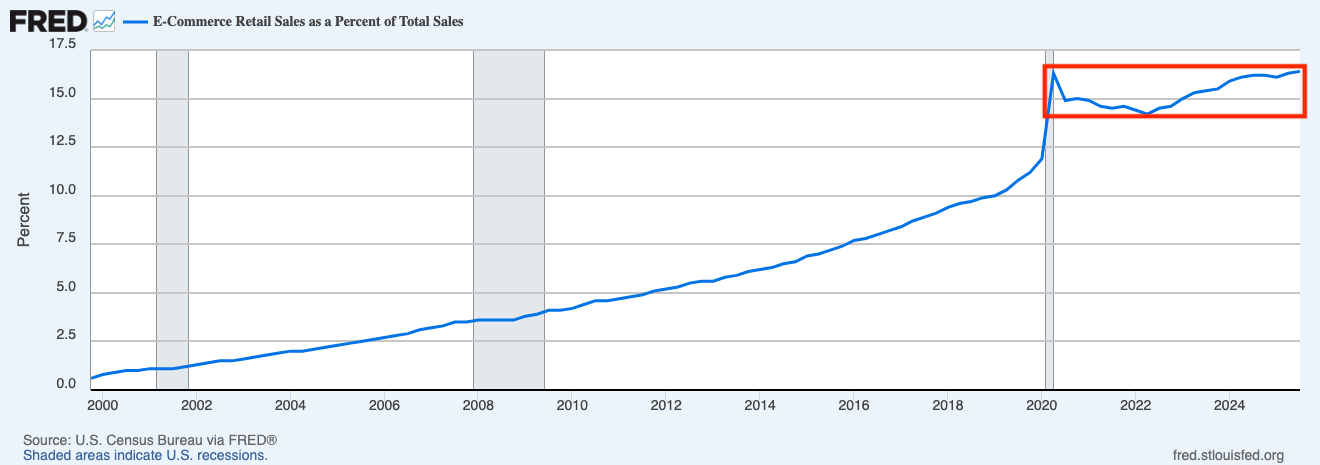
Sure enough, after e-commerce spiked during the pandemic, its share of total retail sales ran into a brick wall and then limped along as shoppers gradually returned to stores.
Source: FRED
As of Q4 2025, e-commerce’s share stood at 16.4%, nearly identical to 5 years ago. Turns out, U.S. consumers still like shopping in stores, and physical foot traffic is far more resilient than many predicted.
The question now is: how can retailers rethink the in-store experience to capture more value from each customer visit?
The Forces Reshaping Brick-and-Mortar
For starters, stores today can now do so much more to meet customer needs.
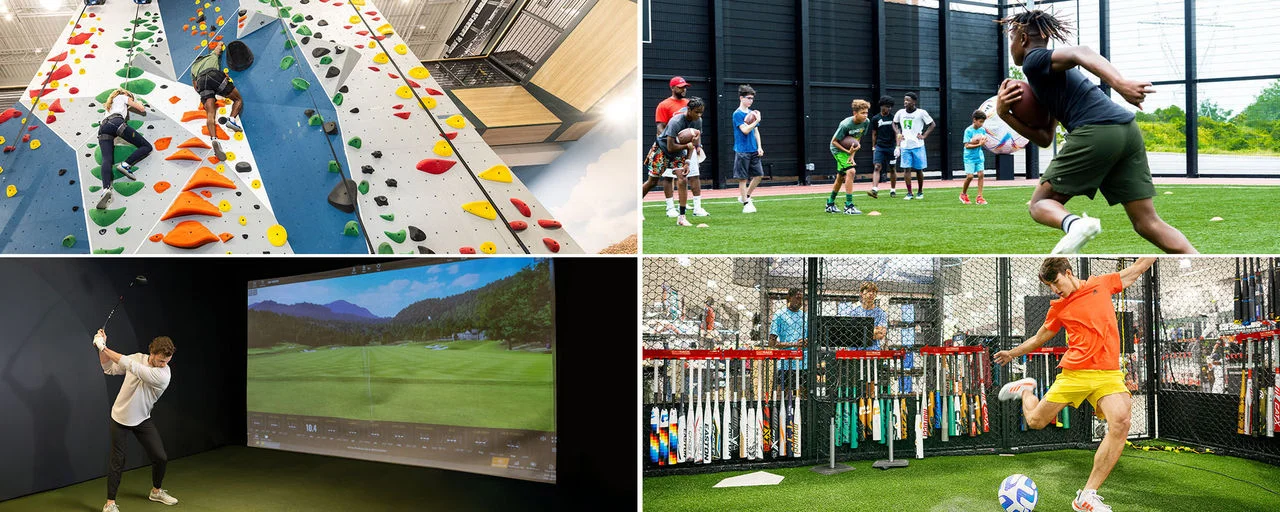
For example, DICK’S House of Sport turns each location into a destination with batting cages, putting greens, and other interactive features that let customers try products and engage with the brand beyond the transaction.
Source: Dick’s Sporting Goods
Yet there’s a big gap between leading and lagging store experiences. While some stores offer seamless, interactive, and omnichannel shopping, others still struggle with:
- Long lines
- Slow checkout
- Locked merchandise
- Difficult returns
- Poor product availability
- Fragmented experiences
The opportunity lies in closing that divide. As stores take on new roles, the business case for physical retail is strengthening, with several powerful forces making the economics of brick-and-mortar more attractive.
Lower barriers to store technology
One of the key drivers is access to technology. Retailers have always wanted better store experiences, but the tools needed to deliver them were often too expensive or difficult to roll out at scale.
Technology today is widely accessible, allowing more businesses to deliver unique retail experiences. Across commerce primitives like customer, product, pricing, promotion, inventory, order, cart, and checkout, businesses have access to increasingly modular solutions that slash costs and streamline operations.
For example, retailers can connect frontline teams with mobile devices, wearables, and communications tools that boost productivity.
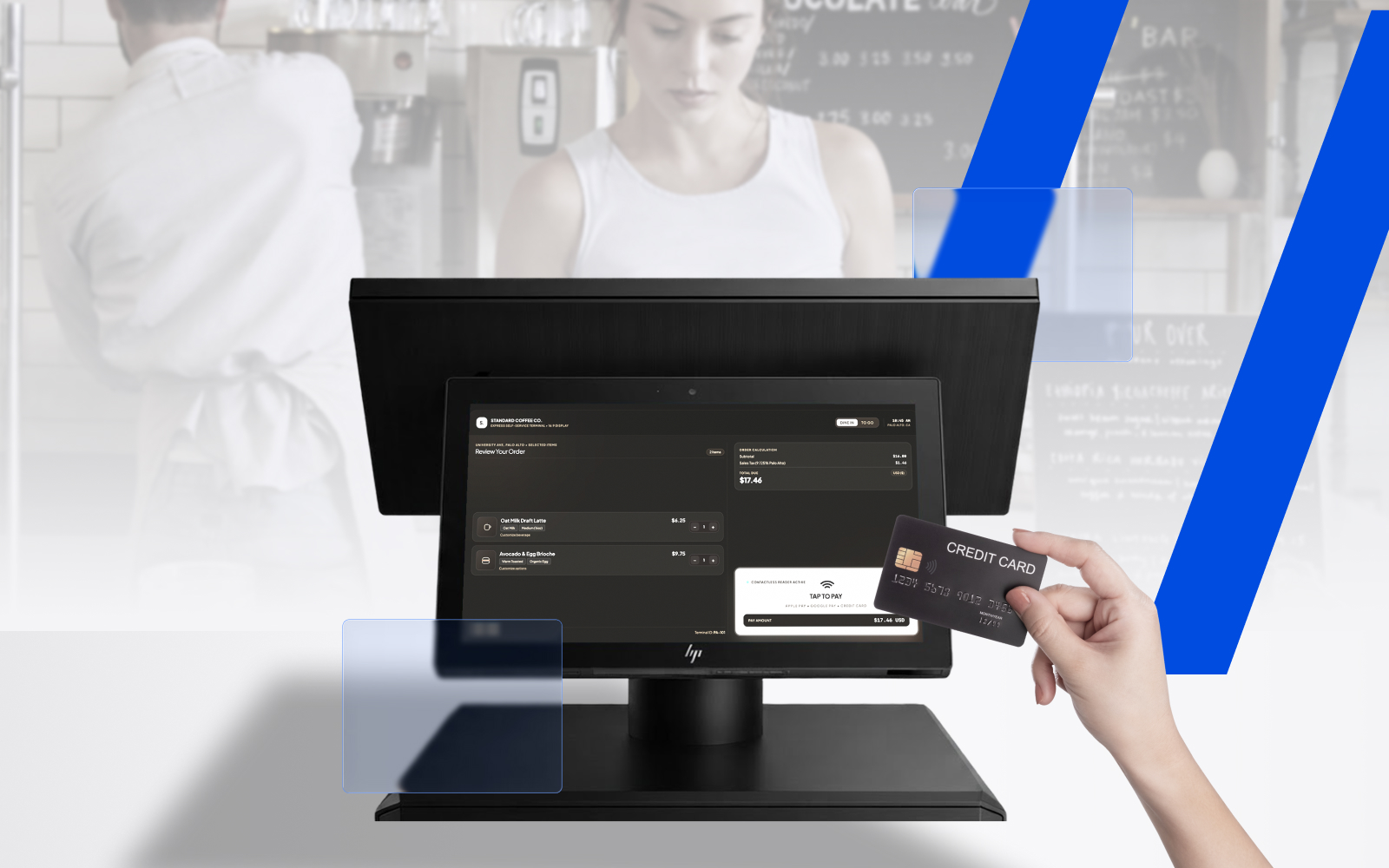
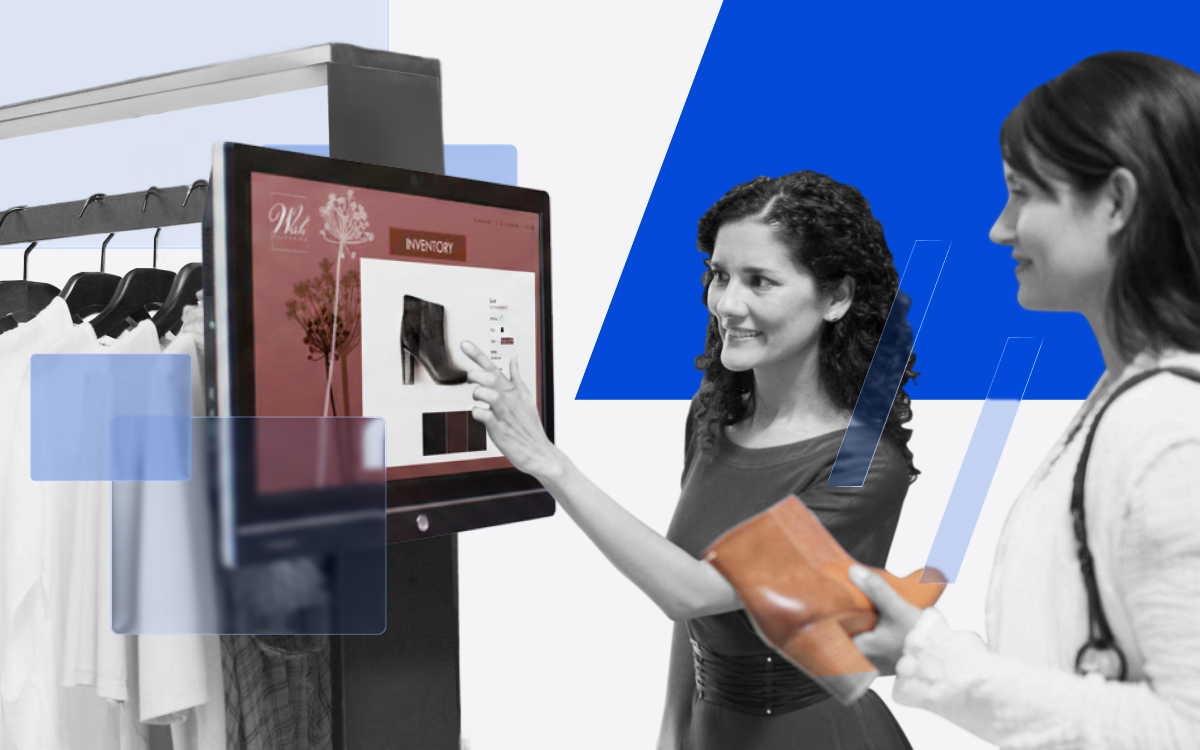
Commerce tools like smart POS, mobile checkout, and integrated payments can speed up transactions. Customer data can also power retail media, digital signage, kiosks, and in-store screens, giving brands new ways to reach shoppers. AR and VR add virtual try-ons, demos, and guided navigation, while AI may have the biggest impact, with 60% of consumers already using it to shop.
Behind the scenes, store PCs, thin clients, on-device intelligence, computer vision, and workflow tools can help operators automate tasks and run stores with more visibility and control.
Evolving customer needs
Today, businesses have an opportunity to transform physical stores into tech-enabled, multifunctional spaces that better meet customer needs. Done well, a modern store can function simultaneously as a:
- Showroom
- Service point
- Fulfillment node
- Returns center
- Media channel
- Community venue
These added capabilities help create new revenue streams and generate more value from the same footprint. They allow retailers to meet a wider range of customer and operational needs through each store.
Rising e-commerce costs
The twin tolls of rising advertising and marketplace fees are pushing up customer acquisition costs and squeezing margins, particularly for brands that sell on Amazon and other third-party platforms.
Meanwhile, fulfillment costs, including shipping, returns, packaging, and last-mile delivery, continue to eat into profitability. Retailers can choose to absorb higher costs, and/or pass them on to consumers, but each option can weaken margins, conversion, or customer loyalty.
Innovative retailers see a great opportunity
Grocery leader ALDI, fashion brand Aritzia, off-price retailers TJ Maxx, Ross Stores, and Burlington, and value chain Dollar General are just a few retailers delivering great customer experiences while expanding their retail footprints. Even Amazon is planning to launch a massive “first of its kind” grocery and retail store.
Forward-thinking businesses that recognize the opportunity now want in on physical retail’s untapped potential.
According to Bain, they’re ready to invest in tech to transform in-store experiences, with 75% of executives planning large-scale store transformations and 59% expecting to spend more on in-store capex.
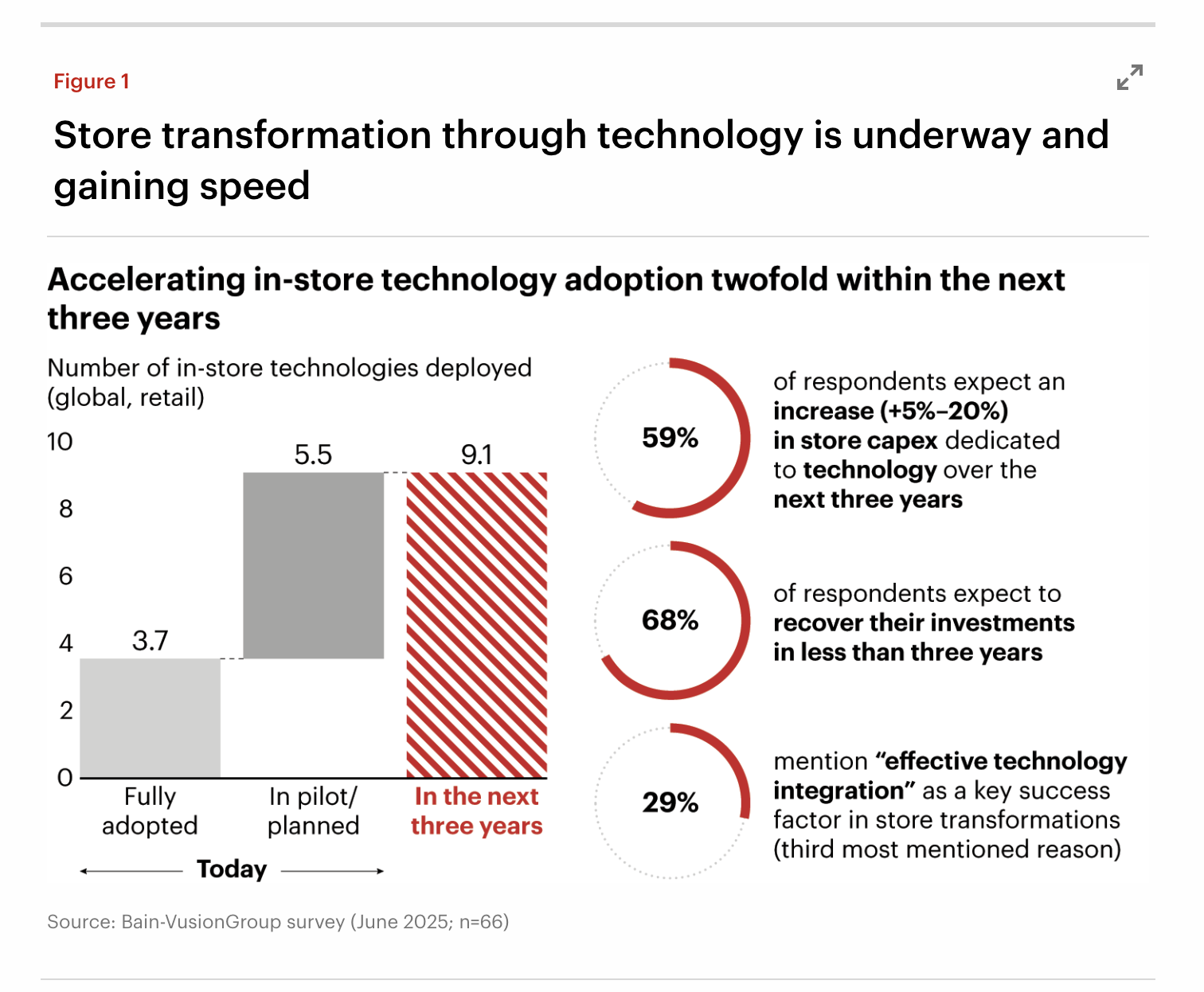
Source: Bain
Transforming Ordinary Stores to Drive Extraordinary Growth
With the right hardware, software, and services, retailers can reinvent the customer experience and unlock more value from their physical footprint. Capturing the opportunity begins with three key priorities.
1. Strengthen store technology
Instead of brittle legacy ecosystems, retailers need smart, reliable technology that stays online and recovers quickly when issues arise. Replacing rigid, monolithic systems with modular architectures also lets them adopt best-of-breed technologies without disrupting the entire environment.
Operational resilience is key as well. In high-volume retail, retailers should set availability targets based on how critical each workflow is. To meet those targets, they need redundancy, fast recovery, remote remediation, and clear service commitments. AI, computer vision, and voice technologies can also help teams detect and resolve issues before they affect customers.
2. Improve labor productivity
Retailers are facing a retention crisis. McKinsey found that 50% of frontline employees and 63% of managers plan to quit in the near term.
Retailers need to make frontline work easier and more engaging from day one. AI and retail software can automate repetitive tasks like fraud detection, planogram compliance, and cleanliness checks. The goal is to implement systems that reduce administrative burden, speed up onboarding, and give employees more time to help customers.
3. Unify commerce
Retail’s aging systems and disconnected tools create fragmented experiences for employees and customers. Adding more point solutions often makes the problem worse.
Retailers need a shared data foundation that connects devices, payments, employees, inventory, and store operations. Bringing everything together creates one cohesive commerce experience across all channels.
Physical Retail is Back
In-store shopping still accounts for the majority of U.S. retail activity, but its future value will depend on how well it supports the wider commerce system.
Businesses have an opportunity to make their stores perform more roles, produce better data, reduce friction, and unify commerce to create more value from the same footprint. By improving the in-store experience, physical stores can once again become engines of profitable growth.
HP Workforce ExperienceTM Platform is a comprehensive digital employee experience solution that enables organizations to optimize IT for every employee’s needs.
Discover how it can transform your IT operations from a cost center to a business accelerator. Simply fill out the form below, and our team will be in touch soon.
From the blog
The latest industry news, interviews, technologies, and resources.





Frequently asked questions
Here's everything you need to know about WXP.
- What is the HP Workforce Experience Platform (WXP)?
- How does WXP work?
- Can WXP be customized to fit specific business needs?
- How is WXP modular?
- Is WXP compatible with different vendors and operating systems?
- How does WXP integrate with other IT tools to provide a more comprehensive solution?
- What is a Workforce Experience score?
- How is AI used within WXP?
- How can I buy WXP and find out about new releases?