
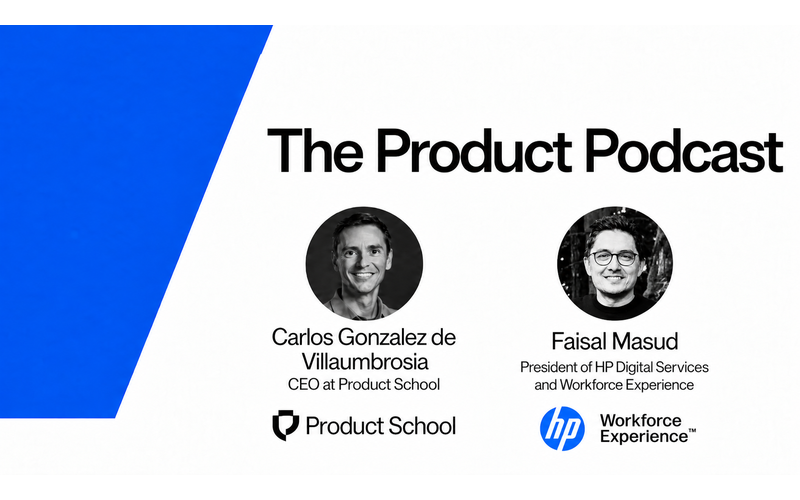
3 Takeaways From The Product Podcast With Faisal Masud
Faisal Masud discusses why AI should support business strategy, how manager roles may change, and why outcomes now matter more than seats.
“If we can’t provide that return on their investment, we shouldn’t exist. It’s as simple as that. The right to be in the room is only earned if we can demonstrate the performance.”
That quote from Faisal Masud, President of HP Digital Services and Workforce Experience, perfectly encapsulates the idea that any technology has to prove its value. Even in the age of AI, where companies are driven heavily by FOMO, the real test is whether those investments actually pay off.
That’s just one of many insights shared in the latest episode of The Product Podcast, hosted by Carlos Gonzales de Villaumbrosia, CEO of Product School. During the 30-minute conversation, the two explored how AI is changing the way companies work, organize teams, and measure the value of technology. Here are three key takeaways from the episode.
AI Is Part of the Strategy, Not *the* Strategy
Shopify CEO Tobi Lütke recently went viral for his “AI slop grenades” comment, criticizing the flood of low-quality AI-generated work employees toss at co-workers. They end up spending more time checking and fixing it than it would have taken the original employees to do the work correctly in the first place.
The irony, of course, is that Tobi made AI use a company-wide “fundamental” and “baseline” expectation last year. From wasting time to adding more work to daily workflows, the lesson is that AI adoption without a clear purpose and human judgment can quickly create more problems than it solves.
Faisal pointed out that companies should treat AI as a tool that supports the strategy, not treat it as the strategy itself. Leveraging AI in the best way possible while utilizing human judgment is where the real impact is.
Middle Management May Become AI Agent Managers
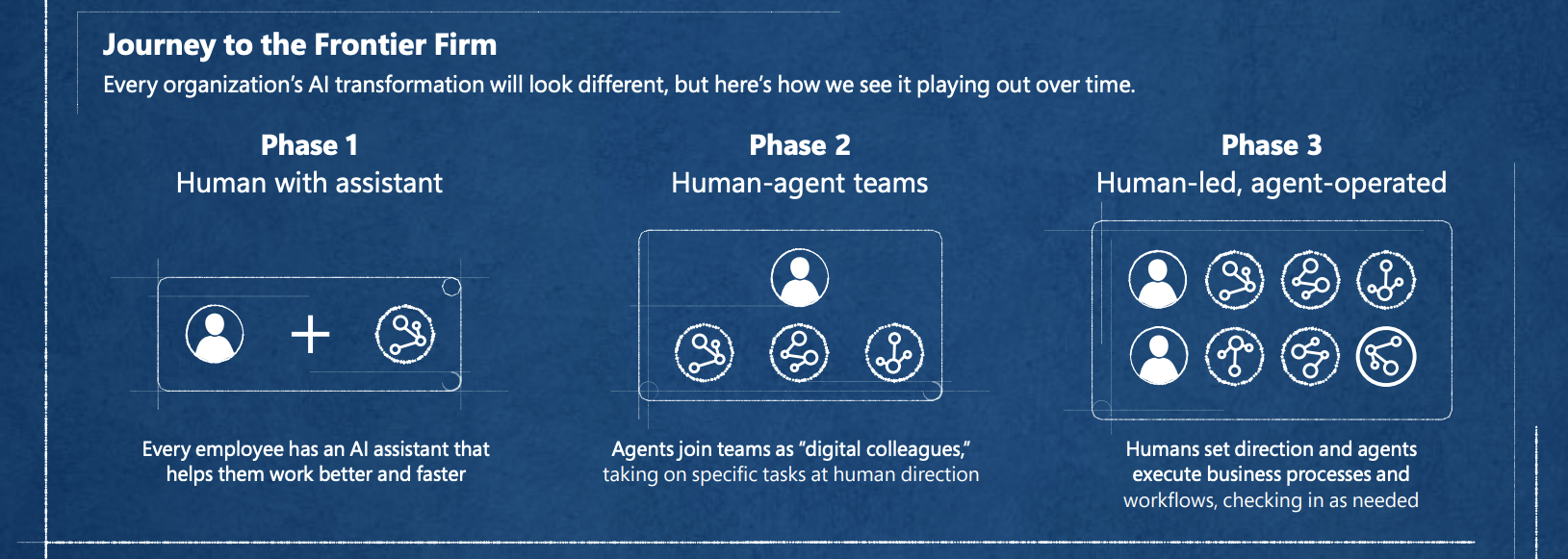
Source: Microsoft
Microsoft predicts that the journey to the “Frontier Firm” will divide into three phases: employees first work with AI assistants; agents then join teams as digital colleagues; and finally, humans set direction while agents run workflows and business processes.
Faisal also expects AI to reshape management structures. He noted that AI can already take on work such as:
- Monitoring
- Data collection
- Information aggregation
As those layers shrink, managers will need to do more than manage people. They may increasingly direct AI agents, make higher-level decisions, and take on more hands-on work.
Outcomes Matter More Than Seats
The software-as-a-service (SaaS) model is rapidly evolving from seat-based pricing to outcome-based pricing. As AI reduces the number of human seats, vendors may need to charge customers based more directly on the value they deliver.
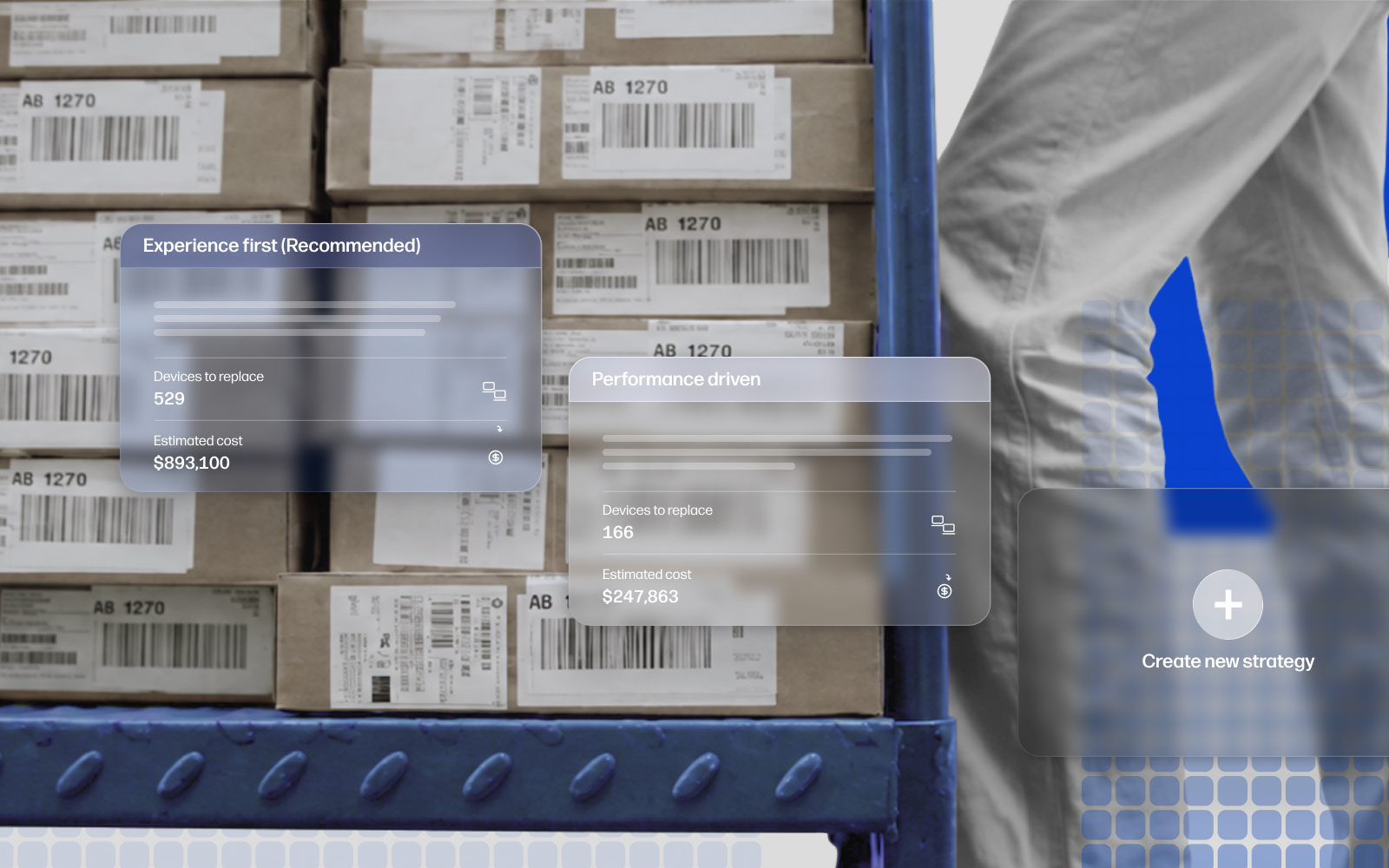
For example, Faisal mentioned how pricing for the HP Workforce Experience Platform (WXP) is tied to outcomes such as:
- Reducing ticket volume
- Lowering IT support costs
- Improving resolution times
- Cutting hardware refresh spending
CIOs increasingly want measurable results and vendors willing to put some “skin in the game” by tying pricing to those outcomes. For HP, that can even mean recommending that customers buy less. According to Faisal:
Selling more hardware is not the answer. It’s selling more actual value to the customer.
Watch the Full Conversation
Those are just a few key takeaways from the conversation. Faisal also touched on how HP is using AI throughout product development, the privacy and security challenges posed by autonomous agents, and why WXP was built to work across devices and operating systems.
To catch the full discussion, check out the video below.
▶ Watch the full interview:
HP Workforce ExperienceTM Platform is a comprehensive digital employee experience solution that enables organizations to optimize IT for every employee’s needs.
Discover how it can transform your IT operations from a cost center to a business accelerator. Simply fill out the form below, and our team will be in touch soon.
From the blog
The latest industry news, interviews, technologies, and resources.




Frequently asked questions
Here's everything you need to know about WXP.
- What is the HP Workforce Experience Platform (WXP)?
- How does WXP work?
- Can WXP be customized to fit specific business needs?
- How is WXP modular?
- Is WXP compatible with different vendors and operating systems?
- How does WXP integrate with other IT tools to provide a more comprehensive solution?
- What is a Workforce Experience score?
- How is AI used within WXP?
- How can I buy WXP and find out about new releases?